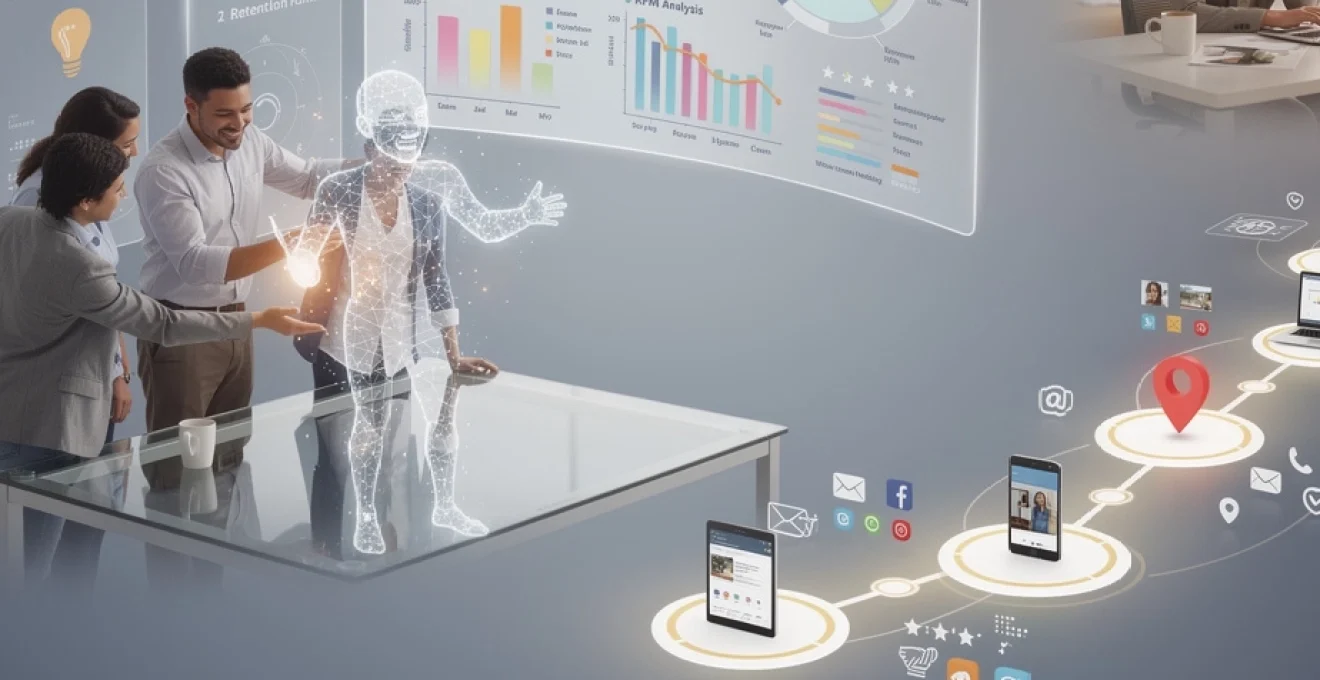
In today’s hyper-competitive marketplace, businesses face an unprecedented challenge: maintaining customer loyalty while competing against countless alternatives just a click away. Traditional marketing approaches that focus solely on acquisition are proving insufficient as customer acquisition costs soar and retention rates plummet. The shift towards relationship marketing represents more than just a strategic pivot; it’s becoming essential for sustainable business growth. This customer-centric approach prioritises building meaningful, long-term connections over transactional interactions, fundamentally transforming how companies engage with their audience. By investing in authentic relationships rather than pursuing one-off sales, businesses can unlock significant value through increased customer lifetime value, reduced churn rates, and enhanced brand loyalty that withstands market volatility.
Customer lifetime value maximisation through strategic relationship building
Customer lifetime value represents the total revenue a business can expect from a single customer throughout their entire relationship. This metric serves as the cornerstone of relationship marketing strategy, providing a clear financial justification for investing in long-term customer relationships rather than pursuing short-term gains. Research indicates that increasing customer retention rates by just 5% can boost profits by 25% to 95%, demonstrating the extraordinary financial impact of relationship-focused approaches.
The fundamental principle behind CLV maximisation lies in understanding that loyal customers generate exponentially more value over time. These customers not only make repeat purchases but also tend to increase their spending with brands they trust. They become less price-sensitive, more receptive to upselling and cross-selling opportunities, and require lower servicing costs as they become familiar with products and processes. This compound effect creates a substantial competitive advantage for businesses that successfully implement relationship marketing strategies.
Calculating CLV using RFM analysis and predictive modelling
RFM analysis—examining Recency, Frequency, and Monetary value—provides a sophisticated framework for calculating and predicting customer lifetime value. This methodology segments customers based on their purchasing behaviour patterns, enabling businesses to identify high-value relationships and allocate resources accordingly. By analysing when customers last purchased (Recency), how often they buy (Frequency), and how much they spend (Monetary), companies can develop predictive models that forecast future customer behaviour with remarkable accuracy.
Modern predictive modelling techniques incorporate machine learning algorithms that analyse vast datasets to identify subtle patterns in customer behaviour. These models can predict which customers are likely to churn, which segments offer the highest growth potential, and what interventions might prevent valuable customers from defecting to competitors. The sophistication of these analytical tools has transformed relationship marketing from intuition-based approaches to data-driven strategies that deliver measurable results.
Amazon prime’s Subscription-Based loyalty ecosystem strategy
Amazon Prime exemplifies how subscription-based models can dramatically increase customer lifetime value through relationship marketing principles. By bundling multiple services—free shipping, streaming content, exclusive deals—Amazon creates a comprehensive ecosystem that becomes increasingly valuable to customers over time. This strategy transforms individual transactions into ongoing relationships, making it economically irrational for customers to switch to competitors.
The brilliance of Amazon’s approach lies in how it addresses multiple customer needs simultaneously while creating switching costs that extend far beyond financial considerations. Prime members develop behavioural dependencies on fast, free shipping and integrate Amazon’s services into their daily routines. This ecosystem approach demonstrates how relationship marketing can create virtually insurmountable competitive moats that protect market share while driving continuous revenue growth.
Retention rate improvement through personalised communication touchpoints
Personalised communication serves as the connective tissue that binds customers to brands over time. Unlike generic marketing messages that treat all customers identically, personalised touchpoints demonstrate understanding of individual preferences, purchase history, and lifecycle stages. This approach significantly improves retention rates by making customers feel valued and understood rather than merely targeted.
Effective personalisation extends beyond simply inserting customer names into email templates. It involves creating communication strategies that deliver relevant content at optimal times through preferred channels. For instance, sending personalised product recommendations based on browsing behaviour, celebrating customer milestones with exclusive offers, or providing proactive customer service based on usage patterns. These touchpoints create emotional connections that transcend purely transactional relationships.
Cross-selling revenue amplification via customer journey mapping
Customer journey mapping reveals critical opportunities for revenue amplification through strategic cross-selling
by identifying the natural decision points and emotional peaks in a customer’s experience. When you map every touchpoint—from first awareness to repeat purchase and renewal—you can spot where complementary products or services would genuinely add value rather than feel like a hard sell. For example, a customer who has just purchased a laptop may naturally need accessories such as a case, extended warranty, or software subscriptions. By aligning cross-sell offers with specific journey stages and customer intent, you create a smoother experience and significantly increase average order value without eroding trust.
Relationship marketing elevates cross-selling from opportunistic to consultative. Instead of pushing as many add-ons as possible, brands use behavioural data to recommend what each customer is most likely to need next. This might involve dynamic product bundles at checkout, personalised “complete your setup” emails post-purchase, or in-app prompts based on previous usage patterns. When done well, customers perceive these offers as helpful guidance, not pressure. Over time, this approach strengthens loyalty while systematically amplifying revenue per customer across the entire lifecycle.
Data-driven customer segmentation and behavioural analytics implementation
Effective relationship marketing is impossible without a solid foundation of data-driven customer segmentation and behavioural analytics. Rather than treating your customer base as a homogeneous group, advanced segmentation enables you to understand the nuanced differences between segments and tailor your relationship marketing strategy accordingly. This is where tools like customer data platforms and integrated CRMs become indispensable, bringing together transactional, behavioural, and engagement data into a unified profile.
Behavioural analytics then turn raw data into actionable insight. By analysing how customers browse, buy, and interact across channels, you can identify high-risk segments, predict churn, and pinpoint the moments when personalised interventions will have the greatest impact. In practice, this means moving from generic campaigns to precision-targeted experiences that feel uniquely relevant to each audience segment. The result is higher engagement, improved retention, and more efficient marketing spend.
Psychographic profiling using salesforce customer 360 platform
Psychographic profiling goes beyond demographics to examine customers’ attitudes, values, interests, and lifestyle choices. Platforms such as Salesforce Customer 360 make it possible to combine survey data, social interactions, purchase history, and service records into a holistic view of each customer. Instead of simply knowing that a customer is a 35-year-old professional, you can understand whether they are sustainability-focused, convenience-driven, or innovation-oriented—and shape your relationship marketing efforts accordingly.
With Customer 360, brands can build segments like “eco-conscious early adopters” or “value-driven families” and then create targeted journeys that speak to their motivations. For instance, a sustainability-focused segment might receive messaging that emphasises ethical sourcing, repair programmes, and carbon-neutral delivery options, while convenience-seekers might prioritise one-click reordering and same-day delivery. By aligning messaging with psychographic profiles, you deepen emotional connection and make loyalty feel like a natural extension of shared values rather than a forced outcome.
Purchase pattern recognition through machine learning algorithms
Machine learning algorithms excel at identifying purchase patterns that would be impossible for humans to detect at scale. By feeding historical transaction data into models, companies can uncover seasonal purchase cycles, preferred product combinations, and typical upgrade timelines. These insights are invaluable for relationship marketing because they allow you to anticipate customer needs before customers articulate them. Imagine being able to proactively remind a customer to reorder consumables just before they run out or suggest an upgrade exactly when their current product lifecycle is ending.
Pattern recognition also supports sophisticated propensity models. These models score customers based on their likelihood to buy, churn, or respond to specific offers. You can then orchestrate highly targeted campaigns, such as exclusive renewal offers for high-churn-risk segments or premium bundles for customers with a high propensity to upgrade. In effect, machine learning transforms your marketing from reactive to predictive, enabling you to be present at precisely the right moment with precisely the right message.
Demographic clustering for targeted campaign optimisation
While psychographics and behavioural data are crucial, traditional demographic clustering still plays a vital role in relationship marketing. Clustering techniques group customers based on variables such as age, location, income, and household composition, revealing segments with distinct needs and response patterns. For example, urban millennials may prefer mobile-first interactions and flexible subscription models, whereas older demographics might value phone support and straightforward pricing.
By overlaying demographic clusters with behavioural and value-based metrics, marketers can prioritise segments that combine high lifetime value with strong engagement potential. Campaigns can then be adapted to the communication channels, offers, and content formats preferred by each cluster. This optimisation ensures that relationship marketing initiatives are not only personalised but also economically efficient, maximising return on investment across the portfolio.
Real-time behavioural triggers in HubSpot CRM systems
Real-time behavioural triggers turn your CRM into a responsive relationship engine. Tools like HubSpot CRM monitor micro-actions—such as email opens, page views, cart additions, or feature usage—and automatically initiate tailored follow-ups. For instance, if a customer repeatedly visits a pricing page without converting, a trigger could prompt a personalised email from sales offering support or a live demo. Similarly, an abandoned cart event can launch a gentle reminder with product benefits or a limited-time incentive.
This event-driven approach ensures your brand reacts instantly to customer signals rather than relying on static campaign schedules. It’s the digital equivalent of a shop assistant noticing when you linger over a product and offering helpful information at just the right moment. When real-time triggers are combined with robust segmentation rules, each automated interaction feels contextually relevant, reinforcing the perception that your brand is attentive and genuinely invested in the customer relationship.
Omnichannel personalisation strategies and customer experience orchestration
Modern customers move fluidly between channels—researching on mobile, purchasing on desktop, engaging on social media, and seeking support via chat or phone. Relationship marketing must therefore embrace omnichannel personalisation, ensuring that every interaction feels connected, consistent, and tailored to the individual. Omnichannel customer experience orchestration is about stitching these touchpoints together into a coherent narrative, where data from one interaction informs the next, regardless of channel.
In practice, this means leveraging unified customer profiles to deliver context-aware experiences everywhere your brand appears. If a customer interacts with a product tutorial on YouTube, your email recommendations should reflect that interest. If they contact support via live chat, the agent should instantly see their purchase history and recent browsing behaviour. Like a well-choreographed performance, each channel plays its part, but the customer experiences it as one seamless relationship. This level of integration not only reduces friction but also signals respect for customers’ time and preferences, significantly boosting long-term loyalty.
Trust-building mechanisms and emotional brand connection frameworks
Trust is the emotional currency that underpins every successful relationship marketing programme. Without it, even the most data-driven personalisation or generous loyalty incentives will ring hollow. To cultivate trust, brands must demonstrate reliability, transparency, and empathy at every stage of the customer journey. Emotional connection then builds on this foundation, transforming satisfied customers into passionate advocates who identify with the brand on a deeper level.
Relationship marketing frameworks increasingly emphasise the interplay between functional value (does the product work as promised?), emotional value (how does it make customers feel?), and social value (what does choosing this brand say about the customer?). When these dimensions align with customers’ self-image and aspirations, loyalty becomes more resilient—even in the face of competitive offers or occasional service failures. The following mechanisms are particularly powerful for strengthening trust and emotional connection.
Transparency protocols in post-purchase communication flows
Post-purchase communication is a critical yet often underutilised phase of relationship marketing. Transparency protocols—clear, proactive updates about orders, delivery, returns, and product usage—signal that you have nothing to hide and everything to share. Customers who receive timely shipping notifications, honest delay explanations, and straightforward return instructions are far more likely to trust your brand, even when things go wrong.
Implementing structured post-purchase sequences can transform anxiety into assurance. For example, a series of emails might guide customers through setup, highlight key features, and share tips for getting maximum value, followed by a clear invitation to provide feedback or reach support. Think of it as onboarding for a relationship rather than a transaction. By acknowledging potential friction points upfront and communicating transparently, you lower perceived risk and lay the groundwork for repeat business.
Social proof integration through user-generated content campaigns
Social proof remains one of the most compelling drivers of trust in the digital age. User-generated content (UGC) campaigns—featuring real customers’ reviews, testimonials, photos, and stories—showcase authentic experiences that prospective buyers can relate to. When customers see people “like them” enjoying your products, the perceived credibility of your brand increases dramatically. This is especially powerful in categories where emotional connection and identity play a central role, such as fashion, fitness, and lifestyle brands.
Relationship marketing leverages UGC not just at the point of acquisition but throughout the customer lifecycle. Inviting loyal customers to share their stories, participate in challenges, or appear in case studies turns them into co-creators of the brand narrative. This co-creation deepens their emotional investment and provides a steady stream of fresh, relatable content. Strategically integrating social proof into landing pages, onboarding flows, and retention campaigns reinforces the message that customers are part of a thriving community, not just isolated buyers.
Brand storytelling methodologies for emotional resonance building
Data may drive targeting, but stories drive emotional resonance. Effective brand storytelling weaves together your purpose, values, and customer impact into narratives that customers can connect with on a personal level. Instead of focusing solely on product features, relationship marketing storytelling spotlights transformation: How is your product helping customers become the person they want to be? What problem does it solve in their everyday life?
Methodologies such as the hero’s journey or customer-centric storytelling place the customer—not the brand—at the centre of the story. Your brand becomes the guide or enabler that helps the hero overcome obstacles and achieve their goals. By consistently telling stories that reflect your audience’s aspirations and struggles, you create a sense of shared journey. Over time, these narratives become part of how loyal customers describe themselves, making the relationship far more durable than any discount or promotion could achieve.
Loyalty programme architecture and gamification psychology
Loyalty programmes translate relationship marketing principles into structured incentives that reward ongoing engagement. However, not all programmes are created equal. High-performing loyalty ecosystems are designed with a clear architecture that aligns rewards with desired behaviours—repeat purchases, referrals, reviews, and deeper product adoption—while leveraging gamification psychology to keep participation engaging and motivating. Instead of merely offering sporadic discounts, these programmes tap into intrinsic drivers such as status, achievement, and belonging.
Tiered structures (for example, Silver, Gold, Platinum) give customers a sense of progression, encouraging them to “level up” through continued engagement. Points, badges, and progress bars provide instant feedback and create a game-like experience, turning routine interactions into small wins. Crucially, the rewards themselves must feel meaningful and attainable. Early access to new products, experiential rewards, and personalised offers often outperform generic coupons because they reinforce the emotional relationship rather than reducing it to price. When thoughtfully architected, loyalty programmes become engines of long-term customer loyalty, not just short-term sales spikes.
Customer feedback loop optimisation and continuous relationship enhancement
Relationship marketing is not a one-time project; it is a continuous cycle of listening, learning, and improving. Optimising the customer feedback loop is essential for keeping this cycle in motion. This involves systematically collecting input through surveys, reviews, NPS scores, and support interactions, then feeding those insights back into product development, service design, and communication strategies. Customers quickly notice when their feedback leads to visible change, which in turn strengthens trust and encourages even more open dialogue.
To make feedback loops truly effective, organisations need clear ownership, cross-functional collaboration, and transparent communication about what is being changed and why. For example, sharing “you asked, we listened” updates—highlighting new features, policy adjustments, or service enhancements driven by customer input—closes the loop and validates the time customers invested in sharing their thoughts. Over time, this iterative approach transforms customers from passive recipients into active partners in shaping the brand. In this environment, loyalty is not just a by-product of good service; it is the deliberate outcome of an evolving, two-way relationship built on respect, responsiveness, and shared success.