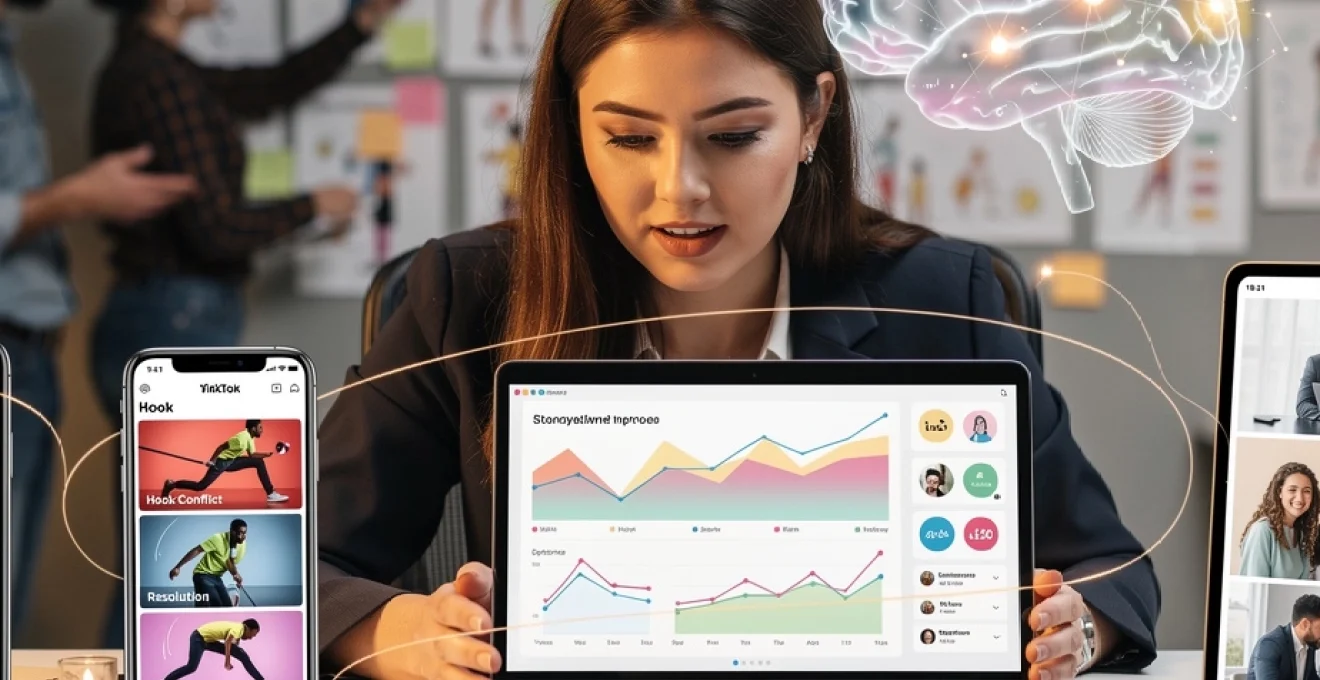
Stories have shaped human communication for thousands of years, and their power remains undiminished in the digital age. Social media platforms have transformed how brands connect with audiences, yet the fundamental principles of compelling narrative remain constant. Research shows that content featuring storytelling elements receives 30% more engagement than traditional promotional posts, with story-driven campaigns generating up to 300% more shares across platforms.
The human brain is naturally wired to process and remember stories more effectively than isolated facts or data points. When brands harness this innate preference for narrative structure, they create deeper connections with their audiences. Understanding why storytelling works requires examining both the neurological mechanisms that drive engagement and the strategic frameworks that maximize reach across different social media platforms.
Neuroscience-based mechanisms behind narrative engagement in digital content
The science behind storytelling’s effectiveness lies deep within human neurology. When audiences encounter well-crafted narratives on social media, specific brain regions activate in predictable patterns. Narrative transportation, the psychological phenomenon where readers become fully absorbed in a story, triggers measurable changes in brain activity. Studies using functional magnetic resonance imaging (fMRI) reveal that story consumption activates the same neural pathways as real-life experiences, making digital narratives feel authentically personal.
These neurological responses explain why story-driven social media content consistently outperforms traditional marketing approaches. The brain processes narrative information differently than factual data, creating stronger memory formation and emotional resonance. This scientific foundation provides the blueprint for understanding how effective social media storytelling operates at the most fundamental level.
Mirror neuron activation through Character-Driven social media posts
Mirror neurons fire both when performing an action and when observing others perform the same action. In social media storytelling, character-driven content activates these neurons, creating empathetic connections between audiences and brand narratives. When followers see relatable characters overcoming challenges or achieving success, their mirror neurons respond as if they were experiencing those situations personally.
Brands leveraging character-driven storytelling report engagement rates up to 40% higher than those using product-focused content. Instagram posts featuring customer success stories, employee journeys, or founder narratives consistently generate more comments and shares. The key lies in creating characters that audiences can identify with, triggering mirror neuron activation and fostering genuine emotional investment.
Dopamine release patterns in story arc consumption on instagram and TikTok
Dopamine, the neurotransmitter associated with reward and pleasure, plays a crucial role in social media engagement. Well-structured story arcs create anticipation patterns that trigger dopamine release at strategic moments. The three-act structure—setup, conflict, resolution—mirrors the brain’s natural reward prediction patterns, keeping audiences engaged throughout the narrative journey.
TikTok’s algorithm particularly favours content that maintains viewer attention through completion. Videos incorporating story arcs show 65% higher completion rates compared to straightforward promotional content. Instagram Stories utilising cliffhangers or progressive reveals experience similar benefits, with audiences more likely to view subsequent story segments when dopamine-driven anticipation is properly cultivated.
Cognitive load theory applications in sequential storytelling formats
Cognitive load theory explains how the brain processes information most efficiently. Social media storytelling must balance complexity with comprehension, ensuring narratives remain engaging without overwhelming audiences. Sequential storytelling formats, such as Instagram carousel posts or Twitter threads, allow brands to manage cognitive load whilst delivering comprehensive narratives.
Research indicates that breaking complex stories into digestible segments increases retention by up to 50%. Each segment should contain one primary narrative element, whether introducing characters, establishing conflict, or revealing resolution. This approach prevents cognitive overload whilst maintaining narrative momentum across multiple posts or platforms.
Oxytocin production through emotional narrative triggers
Oxytocin, often called the “bonding hormone,” increases when audiences experience emotional stories. Brand narratives incorporating vulnerability, triumph, or community connection stimulate oxytocin production, creating stronger brand loyalty. This neurochemical response explains why emotional storytelling generates higher lifetime customer value compared to rational, feature-focused marketing.
Brands that consistently trigger oxytocin through authentic stories see measurable lifts in brand affinity, referral intent, and repeat purchase behaviour. Campaigns that highlight customer transformations, community initiatives, or behind-the-scenes challenges humanise the organisation, making social media interactions feel like ongoing relationships rather than one-off transactions. For marketers, the practical takeaway is clear: if you want deeper engagement and long-term loyalty, design your social media content as an emotional journey, not just an information feed.
Platform-specific storytelling frameworks for maximum algorithmic reach
While the neuroscience behind storytelling is universal, each social media platform has its own culture, content formats, and algorithmic preferences. The same brand story must therefore be told differently on Instagram, TikTok, LinkedIn, and YouTube to maximise reach and engagement. By tailoring story structure to platform norms, you align narrative flow with how users naturally consume content, increasing watch time, saves, comments, and shares.
Effective social media storytelling respects both human psychology and machine logic. Algorithms reward content that holds attention, stimulates interaction, and encourages return visits. When you embed clear narrative arcs into platform-native formats, you create content that feels organic to users and highly favourable to ranking systems—an ideal blend for scalable, story-driven growth.
Instagram stories Three-Act structure implementation
Instagram Stories are designed for fast, vertical consumption, yet they lend themselves surprisingly well to a classic three-act structure. Act I (setup) should appear in the first one to three frames, introducing the scenario, problem, or question that pulls viewers in. Act II (conflict) unfolds across the following frames, revealing obstacles, options, or behind-the-scenes tension that builds curiosity.
Act III (resolution) delivers the payoff: the solution, transformation, or key insight that justifies the viewer’s time and emotional investment. For example, a skincare brand might start with a close-up of a common skin concern, then move into a short routine or customer journey, and conclude with visible results plus a clear call to action. Stories that follow this three-act structure tend to achieve higher completion rates and more replies, signalling strong engagement to Instagram’s algorithm.
Tiktok Hook-Conflict-Resolution formula for viral content
TikTok users decide in seconds whether to keep watching, so story-driven content must open with a powerful hook. The hook-conflict-resolution formula compresses a full narrative into 15–60 seconds by front-loading intrigue. A strong hook might be a surprising statement, an unfinished action, or a visually unusual scene that makes the viewer wonder, “What’s happening here?”
The conflict segment then shows the struggle, process, or tension that sustains attention—whether that’s testing a hack, confronting a fear, or solving a time-sensitive problem. Finally, the resolution delivers the outcome in a satisfying and often repeatable way, prompting comments and shares. Creators who consistently use this micro-story formula often see above-average watch time and replays, both critical signals for viral reach on TikTok.
Linkedin narrative arc optimisation for professional engagement
On LinkedIn, storytelling must balance authenticity with professional relevance. High-performing posts often follow a subtle narrative arc: context, challenge, insight, and takeaway. You might open with a relatable situation (“Last quarter, our campaign nearly failed…”) to provide context, then describe the specific challenge or mistake, which builds tension and credibility.
The insight phase reveals what changed—new data, a strategic shift, or a mindset evolution—before concluding with a concise takeaway that delivers value to the reader. This structure not only humanises you or your brand but also positions you as a thoughtful practitioner. Posts that tell concise, lesson-driven stories tend to generate more comments and meaningful conversations, which LinkedIn heavily rewards in its feed ranking.
Youtube shorts Micro-Storytelling techniques
YouTube Shorts combine TikTok-style brevity with YouTube’s search and recommendation engine, making them ideal for micro-storytelling. Successful Shorts typically open with a visual or verbal hook within the first two seconds, followed by a rapid but clear progression of events. Think of each Short as a distilled episode in a larger series, with its own mini arc that can stand alone yet supports an overarching narrative.
Techniques such as on-screen text, jump cuts, and pattern interrupts help keep cognitive load low while sustaining attention. A fitness creator, for instance, might build a sequence of Shorts around a 30-day challenge, with each video telling the story of a single day’s micro-win or setback. This episodic storytelling encourages binge-watching, subscriptions, and return visits—exactly the behaviours YouTube’s algorithm seeks to amplify.
Data-driven narrative performance metrics and analytics
Storytelling in social media should be as measurable as any other marketing tactic. Rather than judging narratives solely by intuition, you can use analytics to test which story formats, characters, and emotional tones drive the strongest engagement. Core metrics such as watch time, tap-forward/tap-back rates, click-through rates, and comment sentiment reveal how effectively your stories are capturing and holding attention.
Advanced teams go further by creating narrative-specific KPIs: for example, the percentage of users who view all parts of a multi-story sequence, or the uplift in conversion when a product is framed as part of a customer journey rather than as a standalone offer. By A/B testing different openings, narrative lengths, and emotional beats, you can iteratively refine your brand storytelling until it consistently outperforms more transactional content.
Transmedia storytelling strategies across social media ecosystems
Transmedia storytelling involves telling a unified story across multiple platforms, with each channel contributing a unique piece of the narrative. Instead of reposting identical content everywhere, you design an overarching story world and then adapt episodes of that world to the strengths of each platform. This approach increases the impact of social media content by encouraging audiences to follow your brand across channels to get the “full” experience.
Done well, transmedia storytelling turns casual followers into invested participants in your brand universe. They don’t just see isolated posts; they experience an evolving journey that unfolds over time and space. The result is higher cross-platform engagement, stronger recall, and a more resilient brand presence that is less vulnerable to changes in any single algorithm.
Cross-platform character development methodologies
At the heart of transmedia storytelling are consistent, well-developed characters—whether they are founders, customers, employees, or even personified products. On Instagram, a character might appear in visual lifestyle content; on LinkedIn, the same person may share in-depth reflections about leadership or lessons learned. TikTok could focus on their day-to-day challenges, while YouTube hosts longer-form interviews or behind-the-scenes episodes.
Maintaining continuity requires a simple character bible: a documented overview of each key character’s backstory, values, tone of voice, and primary arc. This doesn’t need to be complex, but it should ensure that every appearance across platforms feels coherent and authentic. Over time, audiences begin to anticipate what these characters will do next, much like returning to favourite series, which boosts both reach and retention.
Narrative continuity management between facebook, instagram, and twitter
Managing narrative continuity across Facebook, Instagram, and Twitter (X) is similar to directing a multi-camera shoot: each angle reveals something different, but all serve the same scene. Facebook might carry longer narrative posts or community-focused updates, Instagram emphasises visual moments from the story, and Twitter captures real-time reactions, quotes, or short reflections. Together, they form a complete narrative mosaic.
To avoid confusion or redundancy, plan your story arcs on a shared editorial calendar. Identify which chapter of the story each platform will tell and how they will reference one another. For example, a brand could announce a new initiative via a narrative Facebook post, tease key emotional beats on Instagram, and live-tweet milestones or behind-the-scenes insights as the story unfolds. This deliberate choreography keeps audiences engaged without overwhelming them with repetition.
User-generated content integration within brand storytelling frameworks
User-generated content (UGC) is one of the most powerful tools for extending your brand story because it introduces real-world characters and unscripted perspectives. Instead of treating UGC as random add-ons, weave it directly into your narrative framework. Invite customers to share the “before and after” of using your product, their personal motivations, or the role your brand plays in a meaningful life moment.
You can then curate and reframe this content as chapters within your ongoing story, adding context or commentary that aligns with your brand values. This not only amplifies social proof but also deepens community participation: your audience becomes co-authors rather than passive consumers. The result is a richer, more diverse narrative that resonates across demographics and reinforces trust.
Psychological persuasion techniques embedded in social media narratives
Behind every effective social media story are subtle psychological persuasion techniques that guide how people feel, think, and act. Principles such as social proof, reciprocity, scarcity, and commitment can all be embedded within narratives without resorting to hard-sell tactics. A story about a limited-time community initiative, for instance, can naturally convey scarcity and social proof while still focusing on human outcomes rather than pressure.
Framing is equally important. The same product can be positioned as a tool for avoiding loss or achieving gain, and stories can illustrate each frame in relatable scenarios. You might show how a SaaS platform helped a small business avoid a major setback (loss aversion) or how it enabled unexpected growth (gain framing). By anchoring these persuasive levers in credible, character-led stories, you reduce resistance and increase the likelihood of action while maintaining authenticity.
Brand storytelling case studies: nike’s just do it and dove’s real beauty campaigns
Nike’s Just Do It and Dove’s Real Beauty campaigns are often cited as gold standards for brand storytelling—and for good reason. Both brands moved beyond product features to tap into universal human narratives. Nike consistently tells stories of perseverance, identity, and personal triumph, using athletes and everyday people as characters who embody the brand’s core belief: that greatness is within reach if you’re willing to act.
On social media, these stories appear as short films, athlete spotlights, user-generated challenges, and real-time reactions to cultural moments. The narrative is consistent yet flexible, allowing Nike to address different communities and causes without losing its central message. Engagement metrics reflect this clarity: content tied to strong narrative themes typically outperforms generic product posts by significant margins in both reach and interaction.
Dove’s Real Beauty campaign, meanwhile, reframed the conversation around beauty standards by centring everyday women and their experiences. Instead of aspirational perfection, Dove highlighted vulnerability, self-perception, and empowerment. On platforms like Instagram and Facebook, the brand uses a mix of video, photography, and testimonial-style captions to tell stories that feel intimate and relatable.
These stories trigger powerful emotional responses, often leading to high sharing rates and extensive comment threads where audiences share their own experiences. By making their customers the heroes and positioning the brand as an ally rather than a judge, Dove has built a durable emotional connection that translates into loyalty. Both Nike and Dove demonstrate that when storytelling honours real human complexity, social media becomes more than a distribution channel—it becomes a stage for meaningful, memorable narratives that drive both impact and results.