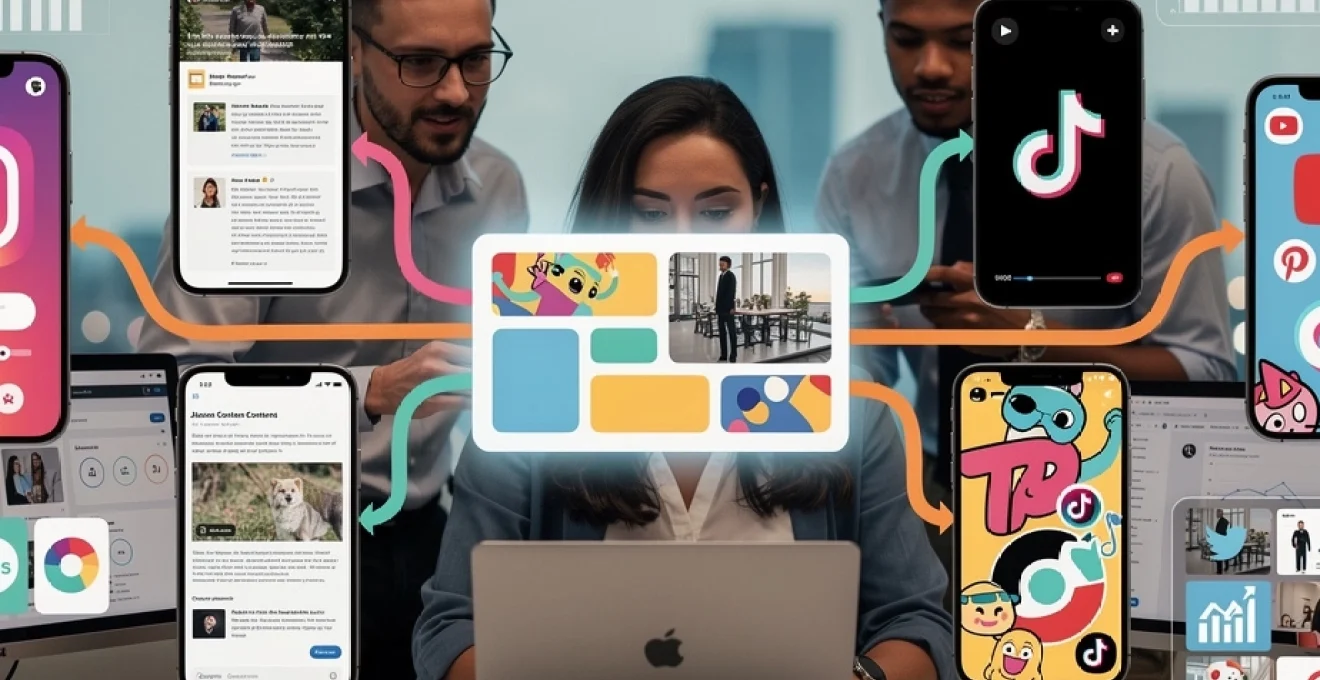
Content repurposing has emerged as one of the most effective strategies for maximising digital marketing ROI whilst reaching diverse audiences across multiple channels. Rather than creating entirely new content for each platform, successful brands are discovering how to transform existing assets into compelling, platform-specific formats that resonate with different audience behaviours and preferences. This approach not only saves considerable time and resources but also ensures consistent messaging across your entire digital ecosystem.
The modern content landscape demands a sophisticated understanding of how each platform functions, from Instagram’s visual-first environment to LinkedIn’s professional networking culture. Strategic content repurposing goes beyond simple copy-and-paste tactics, requiring careful consideration of platform algorithms, audience expectations, and technical specifications. When executed properly, this methodology can multiply your content’s reach by 300-400% whilst maintaining quality and engagement across all channels.
Cross-platform content adaptation methodologies for maximum reach
Successfully adapting content across platforms requires understanding the fundamental differences in how audiences consume information on each channel. The most effective approach involves creating a content hierarchy where one comprehensive piece serves as the foundation for multiple platform-specific adaptations. This methodology ensures consistency whilst optimising for each platform’s unique characteristics and user behaviours.
Platform adaptation isn’t merely about changing dimensions or shortening text; it involves reimagining how your message can best serve the specific audience on each platform. Consider how a detailed industry report might become an infographic series on Instagram, a discussion starter on LinkedIn, and a quick-tips video on TikTok. Each adaptation serves the same core message whilst respecting the platform’s native communication style.
Native format optimisation for instagram stories vs LinkedIn articles
Instagram Stories demand immediate visual impact with bite-sized information that captures attention within seconds. The optimal approach involves breaking complex ideas into digestible, visually appealing segments using bold graphics, minimal text, and interactive elements like polls or questions. Each story frame should function independently whilst contributing to a cohesive narrative that encourages viewers to progress through the entire sequence.
LinkedIn Articles, conversely, thrive on professional depth and actionable insights that demonstrate industry expertise. The same content that works as Instagram Stories can be expanded into comprehensive articles featuring detailed analysis, case studies, and professional commentary. LinkedIn’s audience expects substantial value and practical applications they can implement in their professional lives.
Youtube shorts vertical video transformation from horizontal content
Transforming horizontal video content into vertical YouTube Shorts requires strategic reframing that maintains visual interest whilst optimising for mobile viewing. The most effective technique involves identifying the most engaging segments of longer content and restructuring them with dynamic text overlays, zoomed-in shots, and quick transitions that match the platform’s fast-paced consumption style.
Successful YouTube Shorts repurposing often involves extracting 60-90 second highlights from longer videos, adding captions for accessibility, and incorporating trending audio elements that increase algorithm visibility. The key lies in maintaining the original content’s value whilst adapting to the vertical format’s constraints and opportunities.
Twitter thread segmentation techniques for Long-Form content
Twitter thread creation from long-form content requires careful information architecture that respects the platform’s character limitations whilst building compelling narratives. Each tweet should contain a complete thought that contributes to the overall message, with strategic use of numbers, emojis, and formatting that enhances readability and engagement.
The most effective Twitter threads follow a clear structure: an attention-grabbing opening tweet, supporting points with evidence or examples, and a conclusion that encourages engagement or action. This format allows complex topics to be digestible whilst maintaining the conversational tone that Twitter users expect.
Tiktok Algorithm-Friendly content restructuring strategies
TikTok’s algorithm favours content that generates immediate engagement and maintains viewer attention throughout the entire video. Repurposing content for TikTok requires identifying the most compelling hooks from existing material and restructuring them into fast-paced, visually dynamic presentations that align with current trending formats and sounds.
Successful TikTok repurposing often involves dramatic restructuring of traditional content delivery methods. Educational content might be transformed into quick tutorials, industry insights could become trending challenges, and complex processes might be simplified into entertaining demonstrations
that highlight just one step at a time. Think of it as turning a dense how‑to guide into a series of snackable scenes that still add up to a complete lesson.
Pinterest SEO-optimised pin description reformatting
Pinterest behaves more like a visual search engine than a social network, which means your repurposed content must be structured for discovery. When adapting existing articles, checklists, or infographics into Pins, start by identifying the primary keyword phrase and 2–3 related long-tail keywords that match how users search, such as “B2B content repurposing ideas” or “social media carousel examples.” These phrases should appear naturally in your pin title, description, and alt text without feeling forced.
Each pin description should read like a mini meta description: 1–2 sentences summarising the value, followed by a subtle call to action inviting users to click through for the full resource. Aim for 200–300 characters, include a few branded and descriptive hashtags, and keep the most important terms at the beginning of the description to improve relevance. By systematically reformatting your top-performing blogs or guides into SEO-optimised Pins, you create durable discovery points that can drive referral traffic for months or even years.
Advanced content atomisation frameworks for multi-channel distribution
Once you understand how to adapt content to each platform, the next step is building reliable frameworks for content atomisation—the process of breaking one comprehensive asset into many smaller, channel-ready pieces. This is where you move from ad hoc repurposing to a scalable, repeatable system that your team can execute every week. The goal is simple: create once, then distribute strategically without diluting quality or message.
Effective atomisation starts with clear rules about what qualifies as “pillar content” (for example, a research report, flagship webinar, or definitive guide) and how many derivative pieces you expect from each. Many high-performing B2B teams work on a “1-to-20” or “1-to-30” model, where a single pillar asset fuels an entire month of social, email, and enablement content. With the right framework, you reduce decision fatigue and ensure that every major asset is fully leveraged across your marketing ecosystem.
Gary vaynerchuk’s pillar content strategy implementation
Gary Vaynerchuk popularised the idea of using one substantial “pillar” piece of content as the source material for dozens of micro-assets across channels. In practice, implementing this strategy starts with choosing a format that naturally generates depth—such as a 45–60 minute video podcast, webinar, or keynote presentation. This becomes your single source of truth from which you pull quotes, frameworks, stories, and statistics.
From that pillar, your team can systematically extract content: short vertical clips for TikTok and YouTube Shorts, carousels and text posts for LinkedIn, threads for X, and snippets for your email newsletter. To avoid chaos, document a simple pillar workflow: who owns the initial recording, who timestamps standout moments, who drafts copy variations, and who schedules distribution. Treat the pillar like the trunk of a tree; the more intentionally you design it, the easier it becomes to grow consistent, on-brand “branches” on every platform.
Micro-content creation from webinar recording assets
Webinars are especially powerful raw material for content repurposing because they combine expert insight, visual slides, and often live Q&A. Instead of letting the recording gather dust in a resource library, build a checklist for turning every webinar into at least 10–15 micro-assets. Start by clipping 30–90 second moments where a speaker explains a framework, answers a common question, or shares a counterintuitive insight—these clips are perfect for LinkedIn, YouTube Shorts, and Instagram Reels.
Next, export key slides or diagrams and turn them into standalone graphics with simplified annotations, ready for carousel posts or email illustrations. Finally, use the transcript to draft a blog recap, an internal sales enablement one-pager, and a short FAQ based on participant questions. By treating each webinar like a mini documentary full of reusable scenes, you ensure that a single 60-minute session can fuel content for weeks across your priority channels.
Blog post deconstruction into social media carousel posts
Long-form blog posts are ideal candidates for social media carousels because they already contain structured arguments, subheadings, and examples. To deconstruct a post, begin by identifying the main promise or question it answers; this becomes your first slide hook, written in clear, benefit-led language. Subsequent slides should each capture one key point or step, with minimal copy and a strong visual hierarchy so users can digest the message at a glance.
Think of the carousel as a “visual outline” of the blog: you are not duplicating every paragraph, but distilling the narrative into 7–10 tiles that move the reader from problem to solution. End with a concise summary and a call to action, such as “save this for later,” “share with your team,” or “read the full guide for examples.” This approach not only extends the reach of your blog content on platforms like LinkedIn and Instagram but also gives your audience multiple ways to consume the same idea, depending on their time and attention.
Podcast episode segmentation for platform-specific clips
Podcasts naturally lend themselves to content segmentation because they are conversational and filled with discrete moments of insight. To repurpose an episode effectively, start with a timestamping pass: note where the guest shares a compelling story, a controversial opinion, a framework, or a memorable quote. Each of these segments can become its own asset, whether as an audiogram, a subtitled video clip, or a quote graphic.
On professional platforms like LinkedIn, you might highlight thought leadership moments that speak to industry trends, whereas on TikTok or Instagram you might prioritise more human, behind-the-scenes anecdotes. Consider also turning recurring podcast segments into series—for example, “30-second mindset shifts” or “one tactic that moved the needle”—so your audience can quickly recognise and engage with familiar formats. By viewing each episode not as a single asset but as a library of reusable moments, you dramatically increase the lifespan and visibility of your audio content.
Technical tools and automation workflows for content repurposing
Even the most elegant content repurposing strategy will stall without the right technical stack to support it. Manually resizing images, exporting clips, and posting to each platform quickly becomes unsustainable as your volume grows. This is where automation and specialised tools play a crucial role, reducing repetitive tasks and freeing your team to focus on strategy, creativity, and analysis.
A well-designed repurposing workflow looks more like a production line than a series of one-off tasks. You move from capture (recording, drafting) to transformation (editing, resizing, reformatting) to distribution (scheduling, publishing, monitoring) with minimal manual intervention. The following tools and integrations can act as the backbone of that system, helping you scale your content engine without sacrificing quality or burning out your team.
Canva magic resize feature for multi-platform visual assets
Design is often a bottleneck in cross-platform content marketing because every channel has its own preferred dimensions and layout constraints. Canva’s Magic Resize feature streamlines this challenge by allowing you to create a master design—say, a quote graphic or carousel slide—and automatically generate versions optimised for Instagram, LinkedIn, Pinterest, and Stories with a few clicks. Instead of rebuilding assets from scratch, you simply fine-tune each resized version to ensure key elements stay within safe zones.
To get the most from Magic Resize, build a small library of brand-approved templates for your recurring formats: testimonials, statistics, how-to steps, and podcast promos. When you drop new copy or imagery into these templates, the resizing process becomes almost instant. This not only protects visual consistency across platforms but also significantly increases your capacity to repurpose content at pace, especially if you work with a lean design team.
Loom screen recording integration with hootsuite scheduling
Loom is a powerful tool for quickly capturing screen recordings, walkthroughs, and explainer videos that can later be transformed into social content. For example, a product manager might record a 10-minute Loom demo of a new feature, which the marketing team then edits into several 30–60 second clips for social channels. When paired with a social media management platform like Hootsuite, you can streamline the journey from recording to distribution.
A simple workflow might look like this: record in Loom, export the file, perform light edits and add captions, then upload to Hootsuite for scheduling across LinkedIn, X, and Facebook. Some teams even share Loom links internally first to gather feedback before publishing, reducing rework. By integrating lightweight recording tools with centralised scheduling, you cut the friction between idea, creation, and publication—crucial for staying agile on fast-moving platforms.
Zapier automation workflows for cross-platform publishing
Zapier acts as the connective tissue between many of your favourite apps, enabling you to automate repetitive content tasks without writing code. For content repurposing, you might set up “Zaps” that push new YouTube videos into a Notion content tracker, send podcast episode details to your email platform as draft newsletters, or automatically create social draft posts when a new blog goes live in your CMS.
Imagine, for example, that every time your team uploads a webinar replay to Vimeo, Zapier creates a Trello card with the link, transcript, and a checklist of atomisation tasks. Or consider sending new Instagram posts to a central Google Sheet so you can later review which ones performed best and are worth expanding into blogs or guides. While automation will never replace strategic thinking, it can remove the manual “copy, paste, notify” work that often delays repurposing efforts.
Buffer and later analytics-driven content distribution
Scheduling tools like Buffer and Later are more than simple posting utilities; they provide valuable analytics that inform your cross-platform content strategy over time. By centralising your scheduled posts, you can compare how variations of the same repurposed asset perform on different channels—does a quote graphic drive more engagement on LinkedIn, while a short video wins on Instagram? These insights help you refine future adaptations rather than guessing what might resonate.
Use their analytics dashboards to spot patterns: best times to post for each platform, formats that consistently outperform, and topics that attract saves or shares rather than just likes. Over a few months, you can build a feedback loop where performance data directly shapes which parts of your pillar content you choose to repurpose and how you package them. In this sense, analytics becomes your editorial compass, guiding you toward higher-return content formats for each audience segment.
Repurpose.io automated video-to-audio content conversion
Repurpose.io is designed specifically to streamline the process of turning one content format into many, with a strong focus on video and audio. For example, you can automatically strip audio from your live streams or video podcasts and push it to platforms like Apple Podcasts or Spotify, turning visual content into a standalone listening experience. This is especially useful if you already record long-form video but have not yet tapped into podcast distribution.
Beyond video-to-audio conversion, Repurpose.io can also help with resizing and clipping content for different social formats based on rules you define. Think of it as a “repurposing assistant” that handles the mechanical parts of the process so your team can spend more time on messaging and creative direction. When combined with a thoughtful content atomisation strategy, automation tools like this become force multipliers, enabling you to show up consistently across channels without multiplying your workload.
Platform-specific SEO optimisation strategies
While traditional SEO often focuses on Google, each major platform now has its own search and discovery logic that you must account for when repurposing content. LinkedIn surfaces posts based on relevance and engagement, YouTube functions as a video search engine, Pinterest prioritises keyword-rich Pins, and TikTok’s in-app search is becoming a go-to discovery tool for younger audiences. Treating all of these as part of your multi-platform SEO strategy ensures your repurposed assets remain discoverable long after you hit publish.
Start by mapping core topics from your pillar content to platform-specific search behaviours. A “content repurposing framework” blog might translate into YouTube keywords like “how to repurpose content for social media” or TikTok searches such as “content repurposing ideas for small business.” Optimise titles, descriptions, tags, and on-screen text accordingly, and make sure your visuals and captions reinforce those keywords without sacrificing clarity. In effect, you are localising your SEO for each channel’s search engine while still pointing back to the same underlying expertise.
Content performance analytics and cross-platform ROI measurement
To justify continued investment in content repurposing, you need a clear view of how each adapted asset contributes to business outcomes, not just vanity metrics. This means looking beyond likes and impressions to track metrics such as click-through rate, time on page, saves, shares, and ultimately influenced pipeline or revenue. The challenge, of course, is that attribution becomes more complex as your content spreads across channels and devices.
A practical approach is to define a simple measurement framework that works across platforms: for example, awareness (reach, impressions), engagement (comments, saves, shares), and conversion (form fills, demo requests, trials). Use UTM parameters for all links back to your site, and standardise campaign names so you can compare performance over time in tools like Google Analytics or your CRM. You might not be able to track every interaction—especially in “dark social” spaces like DMs and private communities—but you can build a strong directional picture of which repurposing patterns consistently move the needle.
Legal considerations and copyright management in multi-platform repurposing
Repurposing content across multiple platforms introduces important legal and ethical considerations that marketers cannot ignore. Any time you reuse assets that involve guests, collaborators, or user-generated content, you need to ensure you have the appropriate rights for new formats and channels. That includes permissions for re-editing video interviews into short clips, turning webinar Q&A into blog posts, or featuring customer quotes in social graphics.
Begin by reviewing your existing agreements and terms of service: do they explicitly grant you the right to reuse and adapt content, or are they limited to a single format or campaign? When in doubt, obtain written consent, particularly when using recognisable faces, voices, or proprietary data. Additionally, be mindful of music and stock footage licences, which often have strict platform and usage restrictions. A track cleared for YouTube may not be legal on TikTok, for example.
Implementing a simple rights management checklist can protect your brand and streamline approvals: confirm ownership, document licences, and store consent forms alongside the relevant assets in your DAM or content hub. While this might feel like extra friction at first, it prevents costly takedowns, disputes, or reputational damage later. In a world where content can be copied, remixed, and shared in seconds, taking copyright and consent seriously is not optional—it is a foundational part of a sustainable, scalable repurposing strategy.