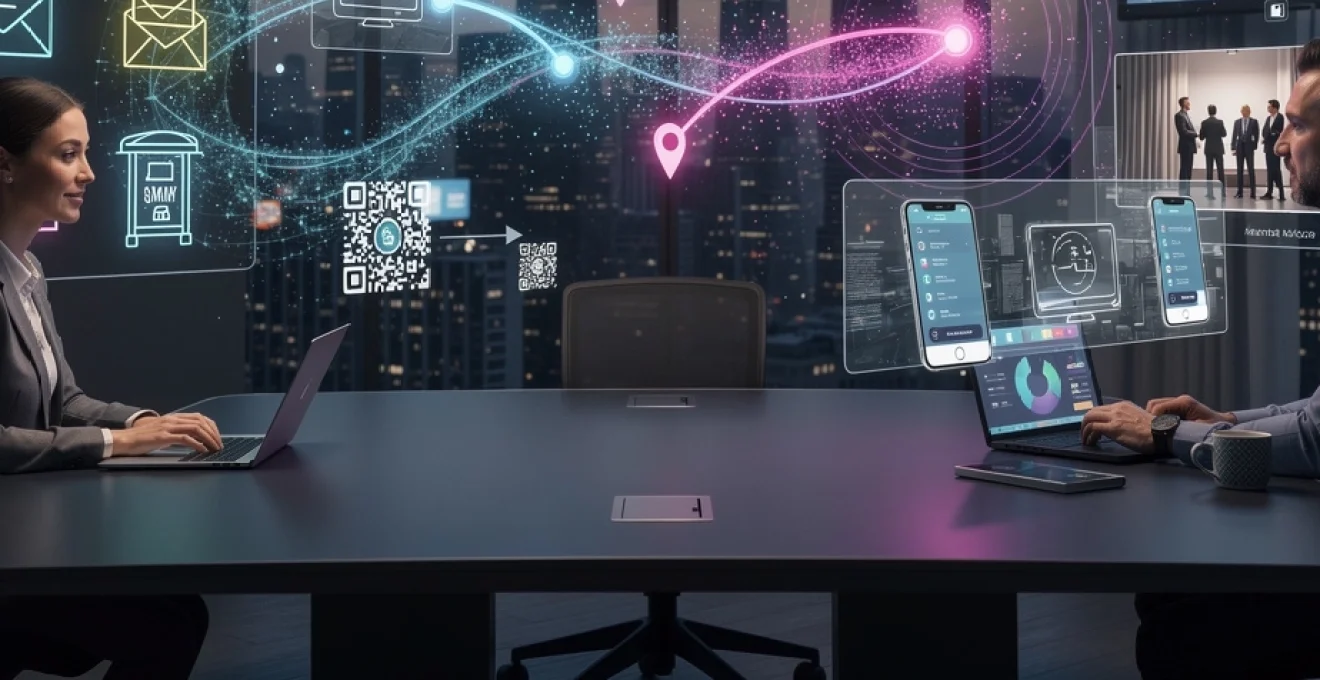
The marketing landscape has undergone a dramatic transformation over the past two decades, with digital channels revolutionising how brands connect with their audiences. However, the notion that traditional marketing methods have become obsolete is fundamentally flawed. Modern marketing success increasingly depends on the sophisticated integration of traditional and digital approaches, creating powerful synergies that amplify brand messaging and drive superior business outcomes. This complementary relationship between offline and online channels represents one of the most significant opportunities for marketers to achieve comprehensive audience engagement.
Today’s most successful campaigns leverage the unique strengths of both traditional and digital marketing, creating omnichannel experiences that meet consumers wherever they are in their journey. Traditional marketing continues to excel in areas such as mass awareness building, credibility establishment, and reaching demographics that may be less digitally engaged. Meanwhile, digital channels provide precise targeting, real-time optimisation, and detailed performance analytics. The strategic combination of these approaches creates a marketing ecosystem where each channel reinforces and amplifies the others.
Omnichannel marketing attribution models for Cross-Platform campaign measurement
Understanding the true impact of integrated marketing campaigns requires sophisticated measurement frameworks that capture interactions across both traditional and digital touchpoints. Modern attribution modelling has evolved beyond simple last-click attribution to encompass complex customer journeys that span multiple channels and timeframes. These advanced measurement systems enable marketers to quantify the contribution of each touchpoint, from television advertisements to social media engagement, providing crucial insights for budget allocation and campaign optimisation.
The implementation of comprehensive attribution models presents unique challenges when traditional media is involved, as offline interactions are inherently more difficult to track than digital behaviours. However, innovative approaches combining survey data, econometric modelling, and digital tracking technologies are creating new possibilities for cross-platform measurement. These methodologies allow brands to understand how traditional marketing activities influence digital engagement and vice versa, revealing the true synergistic value of integrated campaigns.
First-touch attribution analysis in traditional media exposure
First-touch attribution in traditional media requires sophisticated methodologies to capture initial brand exposure through offline channels. Television, radio, and print advertisements often serve as the catalyst for subsequent digital engagement, yet their role in the customer journey can be challenging to quantify. Advanced survey techniques, combined with statistical modelling, help marketers understand how traditional media exposure drives initial brand awareness and consideration. Brand lift studies conducted across exposed and control groups provide valuable insights into the effectiveness of traditional channels in generating first awareness.
The integration of panel data with digital behaviour tracking creates opportunities for more precise first-touch attribution analysis. Media consumption panels that track traditional media exposure can be matched with digital behaviour data to understand how offline exposure influences online actions. This approach enables marketers to quantify the role of traditional advertising in driving website visits, social media engagement, and ultimately conversion activities that may occur days or weeks after initial exposure.
Multi-touch attribution frameworks for TV and radio brand recall
Television and radio continue to play crucial roles in building brand recall and consideration, particularly when integrated with digital touchpoints throughout the customer journey. Multi-touch attribution frameworks for broadcast media must account for the delayed and often indirect impact of these channels on consumer behaviour. Advanced econometric models incorporate factors such as advertising frequency, reach, and timing to assess the contribution of TV and radio campaigns to overall marketing performance. These models often reveal that broadcast media provides sustained awareness benefits that complement and enhance the effectiveness of digital campaigns.
The development of people-based measurement technologies is revolutionising multi-touch attribution for traditional media. By connecting household-level television viewing data with individual digital behaviour through privacy-compliant matching techniques, marketers can create more accurate pictures of cross-channel influence. This approach enables the identification of optimal frequency levels for traditional media that maximise synergies with digital campaigns, helping to prevent over-saturation while ensuring adequate reach and recall.
Cross-device tracking integration with offline conversion metrics
Modern consumers interact with brands across multiple devices and channels, making cross-device tracking essential for understanding the full impact of integrated campaigns. The challenge intensifies when offline conversions, such as in-store purchases or phone inquiries, must be connected to both digital and traditional marketing touchpoints. Advanced identity resolution platforms use deterministic and probabilistic matching to connect consumer interactions across devices, while offline conversion tracking systems employ techniques such as matched market testing and incremental lift measurement to assess campaign impact.
The integration of Customer Relationship Management (CRM) systems with
offline sales systems enables more accurate attribution of revenue to both digital and traditional marketing activities. When point-of-sale data, call centre logs, and in-store visit metrics are linked back to exposure data from TV, radio, print, and online channels, you gain a holistic view of campaign effectiveness. This closed-loop measurement allows you to identify which combinations of offline and online touchpoints drive the most profitable customer journeys, informing smarter budget allocation and creative optimisation.
Media mix modelling techniques for print and digital synergy
Media mix modelling (MMM) provides a powerful, top-down approach for understanding how print and digital channels work together to drive business outcomes. By analysing historical spend, impressions, and performance data across channels, MMM quantifies the incremental contribution of each component in your marketing mix. When executed well, it reveals how print advertising supports digital performance by building baseline awareness, improving click-through rates, and increasing conversion propensity for search and social campaigns.
For brands investing heavily in both print and digital marketing, MMM helps answer critical questions such as: What is the optimal budget split between print and paid search? or How do catalogue drops influence subsequent website sessions and online revenue? Modern models increasingly incorporate granular data, such as regional print insertions and geo-targeted digital campaigns, to capture localised synergies. As privacy regulations reduce the availability of user-level data, robust media mix modelling becomes even more valuable as a strategic planning tool for integrated campaigns.
Direct mail automation and programmatic digital advertising convergence
Direct mail has undergone a quiet renaissance thanks to advances in automation and data-driven targeting, making it a natural partner for programmatic digital advertising. Instead of being a standalone, batch-and-blast tactic, modern direct mail is often triggered by behavioural signals from digital channels and aligned with sophisticated audience segmentation strategies. This convergence allows brands to orchestrate personalised offline touchpoints that reinforce and extend the impact of programmatic display, social, and video campaigns.
When you synchronise direct mail with programmatic media, you create a surround-sound effect that reaches consumers both on-screen and in their physical environment. A prospect who has visited your site, engaged with your content, or abandoned a cart online can receive a tailored mail piece that speaks directly to their interests, often within days. This level of relevance not only increases response rates but also strengthens brand recall, especially for high-consideration or high-value purchases where an extra layer of trust and tangibility matters.
Variable data printing integration with dynamic retargeting campaigns
Variable data printing (VDP) allows each printed piece to be customised with unique text, imagery, and offers based on recipient-level data. When VDP is integrated with dynamic retargeting campaigns, you can extend the logic used for personalised display ads into the physical mailbox. For example, a user who viewed specific product categories on your website could receive a postcard or mini-catalogue featuring those exact categories, supported by a personalised URL or discount code.
This alignment between variable data printing and dynamic retargeting ensures that your offline messaging mirrors your online personalisation strategy. Technically, this is often achieved by feeding audience segments or event triggers from your demand-side platform (DSP) or customer data platform (CDP) into a marketing automation platform connected to your print provider. The result is a coordinated sequence where digital impressions prime interest, and a tailored direct mail piece arrives as a high-impact follow-up, nudging the prospect closer to conversion.
Postal code targeting alignment with geofencing mobile strategies
Postal code targeting has long been a cornerstone of direct mail planning, enabling brands to focus on high-value neighbourhoods, loyalty hotspots, or underserved local markets. When you align these postal code segments with geofencing mobile strategies, you create powerful, locally relevant campaigns that span both physical and digital environments. A household that receives a targeted mailer can later be reached with mobile ads when they are within a specific radius of your store, dealership, or event location.
This postal code and geofencing alignment works especially well for retailers, restaurants, and service-area businesses looking to drive foot traffic. By mapping historical sales and customer density by postal code, you can identify priority zones for both mail and mobile investment. Then, geofenced mobile ads can reinforce the offers or creative themes featured in your direct mail pieces, ensuring that your message remains top-of-mind as recipients move through their daily routines.
QR code bridge technology for offline-to-online customer journey mapping
QR codes have become a critical bridge technology linking traditional marketing assets to digital experiences, especially in direct mail. When each mail piece includes a unique or campaign-specific QR code, you can seamlessly guide recipients from a tangible touchpoint to a trackable online destination. This not only shortens the path to conversion but also provides valuable data on which offline audiences are most engaged with your digital content.
From a measurement perspective, QR codes enable more granular customer journey mapping across offline and online channels. You can see which creative variants, offers, or postal code segments drive the most scans, and then follow those users’ subsequent behaviour on your website or app. Over time, these insights support continuous optimisation of both your direct mail strategy and your broader digital marketing mix, ensuring that traditional and digital tactics work together rather than in isolation.
PURLS (personalised URLs) and UTM parameter tracking synchronisation
Personalised URLs (PURLs) extend the idea of a unique digital bridge even further by giving each recipient their own dedicated landing page. When combined with UTM parameter tracking, PURLs allow you to attribute online behaviour and conversions back to specific direct mail audiences, creatives, or offers. This level of tracking turns what was once a “black box” channel into a measurable contributor within your overall digital strategy.
To maximise impact, many brands now synchronise PURL structures with their broader analytics taxonomy, using consistent UTM conventions for source, medium, and campaign naming. This ensures that visits from direct mail appear cleanly alongside traffic from paid search, social, and display within analytics dashboards. As a result, marketers can compare performance across channels, calculate true omnichannel ROI, and refine both their offline and online tactics based on evidence rather than assumptions.
Television advertising frequency capping with social media reach extension
Television advertising remains one of the most effective ways to build rapid, broad-based awareness, but it can also become inefficient when viewers are exposed too frequently to the same creative. Frequency capping strategies, familiar from digital advertising, are increasingly being applied to TV using advanced audience measurement and addressable TV technologies. By controlling how often specific households see your TV ads, you reduce wastage and free up budget to extend your reach through complementary digital channels such as social media.
Social platforms offer an ideal environment for reinforcing and extending the impact of TV campaigns. You can retarget audiences who have been exposed to your TV creative with sequenced social ads that deepen the message, provide additional information, or drive specific actions. Conversely, you can use social media to reach incremental audiences that your TV buy may have missed, such as cord-cutters or younger demographics who consume more content on mobile. When TV frequency capping and social media reach extension are planned together, you create an efficient, cross-channel strategy that balances repetition with breadth.
Event marketing amplification through Real-Time social media activation
Physical events—whether trade shows, conferences, pop-up activations, or product launches—offer rich opportunities for immersive brand experiences. Yet their true value is unlocked when those experiences are amplified beyond the venue through real-time social media activation. By integrating structured social components into your event marketing strategy, you extend the reach of in-person moments to broader digital audiences while also capturing user-generated content that can fuel future campaigns.
From a strategic standpoint, you can think of event marketing as the “live stage” and social platforms as the “broadcast network” that carries your story to the world. Planned hashtags, live content formats, interactive installations, and influencer partnerships all work together to turn attendees into co-creators of your brand narrative. The result is a feedback loop where physical engagement drives digital conversation, and digital visibility attracts more interest in future physical events.
Live twitter wall integration at trade shows and conferences
Integrating a live Twitter wall into your trade show or conference presence transforms passive social mentions into an active part of the event experience. By displaying curated tweets that use the official event hashtag or your brand handle, you encourage attendees to join the conversation in real time. This not only boosts social reach but also creates a sense of community and participation around your stand or session.
To maximise impact, you can prompt specific behaviours such as answering questions, sharing key insights, or posting photos from your booth in exchange for recognition on the screen or small rewards. Moderation tools ensure that only appropriate content appears on the wall, while analytics from the hashtag activity provide insights into engagement levels, sentiment, and influential participants. Over time, these real-time activations help position your brand as a dynamic, digitally savvy presence at industry events.
Instagram story takeovers during product launch events
Instagram Stories have become a go-to format for capturing the immediacy and emotion of live events. During a product launch, inviting influencers, partners, or even internal experts to “take over” your Stories can inject fresh perspectives and behind-the-scenes access that feel authentic to followers. This approach turns a one-off physical moment into a multi-layered digital narrative that audiences can experience in near real time.
Strategically, you can plan Story segments that mirror the flow of the event—teasers during setup, live reactions to announcements, close-ups of product features, and attendee testimonials. Interactive features such as polls, questions, and link stickers further bridge the gap between viewing and engaging. When coordinated with traditional media coverage or in-store launch activities, Instagram Story takeovers help create a unified, omnichannel product debut that feels both intimate and expansive.
Linkedin event pages for B2B networking session promotion
For B2B organisations, LinkedIn Event Pages provide a powerful digital counterpart to physical networking sessions, seminars, and roundtables. By creating a dedicated event space on LinkedIn, you can promote your offline activity to a highly targeted professional audience, gather RSVPs, and share pre-event content that builds anticipation. This not only increases attendance but also ensures that the right decision-makers are in the room.
During and after the event, LinkedIn Events become hubs for ongoing engagement. Attendees can connect with one another, access presentation materials, and continue discussions in the comments. Meanwhile, you can retarget registrants and attendees with sponsored content, lead generation forms, or follow-up offers. In this way, traditional networking sessions evolve into sustained relationship-building programmes that bridge offline interactions and digital lead nurturing.
User-generated content campaigns at physical brand experiences
User-generated content (UGC) campaigns unlock the storytelling power of your audience, especially at physical brand experiences where there is plenty to see, do, and share. By designing photo-worthy installations, branded backdrops, or interactive demos and pairing them with clear social-sharing prompts, you transform attendees into content creators. Hashtags, contests, and on-site incentives help encourage participation and ensure that the resulting content is easy to discover and amplify.
From a digital strategy perspective, UGC generated at events provides authentic creative assets that can be repurposed across your owned and paid channels long after the event ends. Featuring real customers or attendees in your social feeds and email campaigns builds trust and relatability, while also reinforcing the perceived value of participating in your future events. Over time, this blend of physical experience and digital storytelling strengthens community around your brand and extends the lifespan of each event far beyond its scheduled hours.
Out-of-home advertising synchronisation with Location-Based mobile marketing
Out-of-home (OOH) advertising—billboards, transit ads, street furniture, and more—remains a powerful way to reach consumers in the physical world at scale. However, its impact is magnified when synchronised with location-based mobile marketing that targets users in the same geographic areas. By coordinating creative themes, timing, and audience segments across OOH and mobile, you ensure that your message follows consumers from the sidewalk to their smartphones, reinforcing recognition and prompting digital engagement.
This synchronisation is made possible by advances in mobile location data and programmatic digital out-of-home (DOOH) platforms. You can now activate mobile campaigns that target devices detected within a set radius of specific OOH placements, or retarget users who have passed by a billboard with follow-up ads later in the day. The effect is similar to seeing a product featured in a shop window and then encountering it again in your social feed—a subtle but powerful reminder that nudges interest toward action.
Digital billboard dynamic content triggered by weather API integration
One of the most compelling advantages of digital billboards is their ability to display dynamic content that changes based on external triggers, such as time of day, traffic conditions, or weather. By integrating weather APIs into your DOOH campaigns, you can tailor messages in real time to match current conditions—promoting hot drinks when temperatures drop, sunscreen when UV levels are high, or indoor activities when it starts to rain. This contextually relevant messaging increases both attention and perceived usefulness.
When paired with mobile advertising, weather-triggered digital billboards become the first step in a context-aware customer journey. A commuter who sees a billboard for cold brew coffee on a hot day might later receive a mobile coupon for a nearby café, delivered through location-based targeting. This combination of macro-level visibility and micro-level personalisation showcases how traditional placements and digital signals can work together to create timely, compelling offers.
Bus stop advertising coordination with proximity-based push notifications
Bus shelters and other street-level OOH formats often reach audiences during idle moments, such as waiting for public transport. Coordinating bus stop advertising with proximity-based push notifications allows you to capitalise on this dwell time by extending your message to users’ mobile devices. For example, a retailer could promote an in-store sale on the bus shelter poster while sending a push notification with a limited-time discount to app users within a few hundred metres of that location.
To implement this strategy effectively, you need an app or partner network capable of delivering geo-triggered messages, as well as clear user consent for location sharing. When executed with sensitivity to frequency and relevance, these proximity-based interactions feel like helpful nudges rather than intrusive interruptions. Over time, you can analyse performance by location, time, and creative variant to refine both your OOH placements and your mobile messaging strategy.
Transit advertising campaigns linked to spotify audio ad retargeting
Transit advertising on buses, trains, and platforms offers repeated exposure to commuters who often listen to music or podcasts during their journeys. Linking these traditional placements to Spotify (or other audio platform) ad retargeting creates a cross-sensory campaign where visual and audio messages reinforce one another. A commuter might first notice your ad on a train panel and later hear a related audio spot in their playlist, deepening recall and emotional connection.
Technically, this linkage is often achieved using geo-targeted audio campaigns that focus on areas served by specific transit lines or stations. You can also align campaign timing with peak commuting hours and mirror key phrases or sonic branding elements across both OOH and audio creatives. This integrated approach acknowledges how people actually experience media on the move—through a blend of what they see around them and what they hear through their headphones.
Print media QR code integration with progressive web app experiences
Print media—magazines, newspapers, brochures, catalogues—still plays a vital role in storytelling and brand building, particularly for audiences who value depth and tangibility. Yet the real opportunity lies in connecting these static formats to rich, interactive digital experiences. By integrating QR codes that link to Progressive Web Apps (PWAs), you transform print pages into gateways to app-like functionality that works seamlessly in the mobile browser, without requiring a download from an app store.
PWAs offer fast loading, offline capabilities, and the ability to send push notifications, making them ideal companions to traditional print campaigns. A reader can scan a QR code in a catalogue to explore 360-degree product views, configure options, or check real-time availability—all within an experience that feels as smooth as a native app. For publishers and advertisers, this approach combines the credibility and attention of print with the measurability and agility of digital, creating a more cohesive omnichannel marketing strategy.