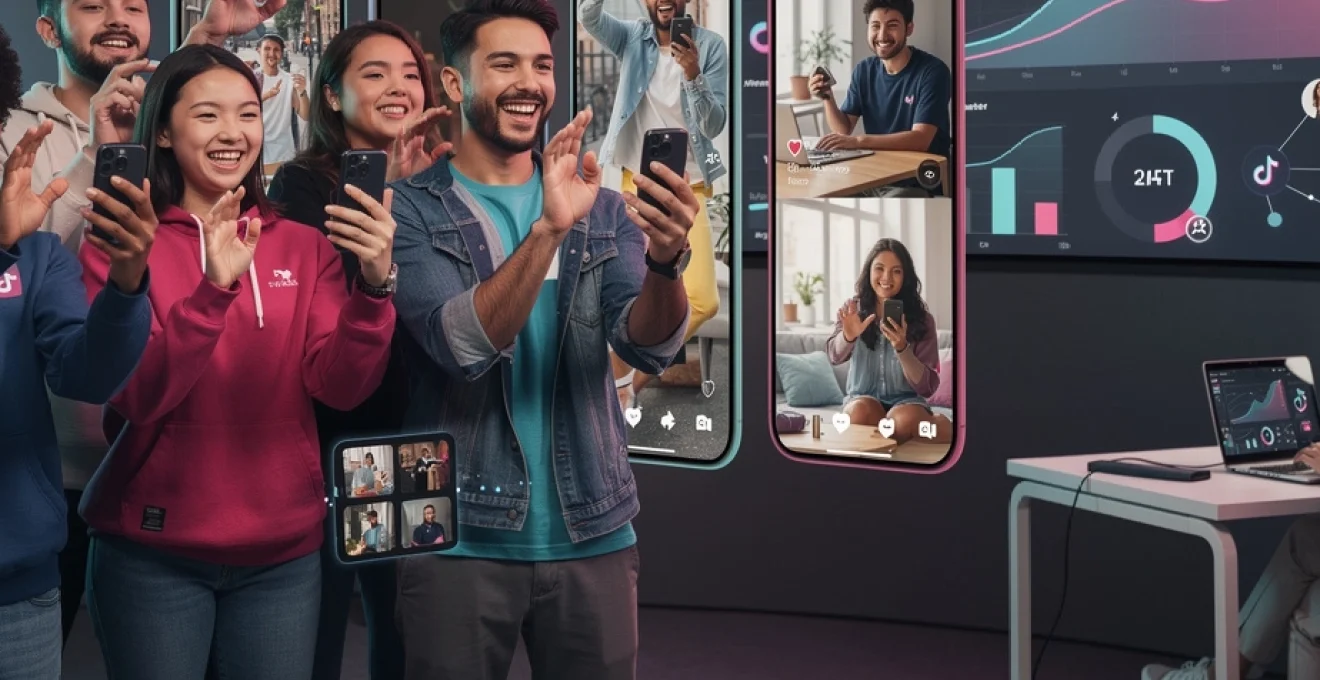
The explosive growth of TikTok has fundamentally transformed how brands approach community building in the digital age. With over 1 billion monthly active users and an average daily engagement time of 95 minutes, the platform represents a goldmine for brands seeking authentic connections with their audiences. TikTok challenges have emerged as the most effective mechanism for fostering active brand communities, leveraging the platform’s unique algorithm and user behaviour patterns to create viral engagement that transcends traditional marketing boundaries.
Unlike conventional social media strategies that rely heavily on polished content and celebrity endorsements, TikTok challenges democratise brand participation by inviting everyday users to become content creators. This participatory approach generates authentic user-generated content whilst simultaneously building emotional connections between brands and their communities. The psychological appeal of challenges taps into fundamental human desires for recognition, creativity, and belonging, making them particularly effective for community-driven marketing initiatives.
The success of branded challenges extends far beyond simple visibility metrics. Research indicates that brands utilising TikTok challenges experience a 68% increase in brand recall among Gen Z consumers, with 78% of participants reporting stronger brand affinity following challenge participation. These statistics underscore the platform’s unique capacity to transform passive consumers into active brand advocates through carefully orchestrated community experiences.
Viral challenge mechanics: understanding TikTok’s Algorithm-Driven community engagement
TikTok’s algorithm operates on sophisticated machine learning principles that prioritise content based on user interaction patterns, completion rates, and engagement velocity. Understanding these mechanics is crucial for brands seeking to leverage challenges for community building. The platform’s For You Page algorithm evaluates content within the first few hours of publication, making initial engagement critical for viral success.
The algorithm considers multiple factors when determining content distribution: video completion rates, share frequency, comment engagement, and profile visits. Successful challenges typically achieve completion rates above 85%, indicating that content must be immediately engaging and accessible to diverse audiences. This algorithmic preference for high-completion content influences challenge design, favouring shorter, more dynamic formats over lengthy explanations.
Hashtag amplification strategies through ForYou page optimisation
Strategic hashtag implementation serves as the backbone of successful TikTok challenges, with optimal hashtag strategies combining branded tags with trending community hashtags. Research demonstrates that challenges utilising 3-5 hashtags achieve 40% higher reach than those using fewer or more tags. The most effective approach involves pairing a unique branded hashtag with 2-3 trending hashtags relevant to the target demographic.
Hashtag timing plays a crucial role in challenge success, with peak engagement occurring when branded hashtags are introduced during trending topic cycles. Brands should monitor hashtag performance using TikTok’s analytics tools, adjusting strategies based on engagement patterns and competitor analysis. The platform’s hashtag discovery mechanism rewards consistent usage patterns, making sustained hashtag campaigns more effective than sporadic implementations.
User-generated content velocity and engagement rate correlation
The velocity of user-generated content creation directly correlates with long-term engagement rates and community sustainability. Challenges generating 100+ pieces of user content within the first 48 hours typically maintain engagement for 2-3 weeks longer than slower-starting campaigns. This initial momentum creates a snowball effect that sustains community participation beyond the official challenge period.
Content velocity depends heavily on challenge accessibility and creative flexibility. The most successful challenges provide clear participation guidelines whilst allowing significant creative freedom for individual interpretation. This balance enables diverse content creation whilst maintaining brand consistency, resulting in sustained engagement from varied demographic segments within the target community.
Tiktok’s creator fund integration with brand challenge campaigns
TikTok’s Creator Fund offers unique opportunities for brands to amplify challenge participation through financial incentives for content creators. Brands partnering with Creator Fund participants typically see 300% higher engagement rates compared to non-incentivised challenges. These partnerships create mutually beneficial relationships where creators gain monetisation opportunities whilst brands access established audiences.
Creator Fund integration requires careful consideration of brand safety and content quality standards. Successful implementations involve pre-screening potential creators, establishing clear content guidelines, and maintaining ongoing communication throughout campaign duration. This approach ensures brand alignment whilst preserving the authentic voice that makes creator content effective.
Cross
Cross-platform virality: instagram reels and YouTube shorts spillover effects
Although TikTok is the origin point for most challenges, their impact rarely stays confined to a single platform. High-performing TikTok challenges are frequently repurposed as Instagram Reels, YouTube Shorts, and even Twitter clips, creating a multi-platform viral loop that compounds brand exposure. When users export their TikTok videos with the watermark intact, they effectively turn every repost into a portable billboard for both the challenge and the originating platform.
For brands, cross-platform virality means that a well-designed TikTok challenge can generate incremental impressions and engagement without additional media spend. You can encourage this spillover by explicitly inviting participants to share their entries on other channels, tagging your brand and maintaining the same branded hashtag where possible. This approach not only amplifies reach but also attracts non-TikTok users back to your profile, strengthening your overall social media ecosystem and not just your presence on a single app.
Strategic challenge framework development for brand community building
Building an active community through TikTok challenges requires more than a catchy song and a clever hashtag; it demands a repeatable, strategic framework. Think of a challenge as the “engine” of your brand community: its structure, timing, and incentives determine how far and how fast that engine can run. A robust framework aligns your challenge concept with business objectives, audience insights, and platform mechanics, turning one-off virality into a sustainable community-building strategy.
At its core, this framework should address four dimensions: narrative (what story the community is invited into), participation (how easy it is to join), amplification (who helps spread it), and retention (how you keep people engaged after the initial hype). When these dimensions are intentionally designed, TikTok challenges evolve from short-lived stunts into community rituals that audiences look forward to and identify with over time.
Branded hashtag challenge architecture: #ChipotleLidFlip case study analysis
The #ChipotleLidFlip challenge is a textbook example of effective branded hashtag architecture driving community engagement. The mechanic was simple: flip the lid of a burrito bowl and catch it perfectly, a move inspired by real Chipotle employees. This clarity of action, combined with a strong visual payoff, made it extremely replicable for everyday users while staying tightly connected to the product and in-store experience.
From a structural perspective, the challenge layered three key elements: a memorable branded hashtag, a clear physical action that could be instantly recognised in the feed, and creator partnerships to seed early participation. By collaborating with food and lifestyle creators to demonstrate the move, Chipotle generated fast user-generated content velocity, which in turn signalled to TikTok’s algorithm that this was a trend worth amplifying. The result was not just millions of views but a sense of insider culture—participants felt like they were part of a “club” that understood the ritual of ordering and enjoying Chipotle.
Micro-influencer seeding protocols and community ambassador programs
While mega-creators can provide a powerful initial spike in visibility, micro-influencers are often more effective for sustained community building on TikTok. Micro-creators (typically 10k–100k followers) tend to have higher engagement rates and tighter-knit communities, which makes their endorsement feel more like a friend’s recommendation than a traditional ad. Seeding your TikTok challenge through 20–50 micro-influencers can create a dense web of content around your hashtag, increasing the likelihood that users encounter your challenge multiple times across their For You Page.
A structured seeding protocol should define selection criteria (audience demographics, content niche, past performance), deliverables (number of videos, posting windows, messaging guardrails), and feedback loops. Going one step further, brands can formalise the most aligned creators into community ambassador programs, giving them early access to future challenges, product drops, or co-creation opportunities. Over time, these ambassadors become the “faces” of your brand community on TikTok, providing continuity between individual campaigns and helping your audience feel like they belong to an ongoing movement rather than a one-off promotion.
Challenge duration optimisation: 7-day vs 14-day campaign performance metrics
Deciding how long your TikTok challenge should run is a strategic lever that directly affects engagement curves and community fatigue. Shorter 7-day challenges tend to generate sharper spikes in participation, capitalising on a sense of urgency and FOMO-driven content creation. They are particularly effective for time-bound events such as product launches, limited drops, or seasonal moments where you want a high-intensity burst of attention.
In contrast, 14-day (or longer) challenges can be more suitable for deeper community building and storytelling. They give creators time to iterate, duet each other, and experiment with more elaborate content formats, which often leads to higher-quality user-generated content and stronger emotional connection with the brand. However, longer durations require active stewardship: you must continuously highlight new entries, refresh prompts, and potentially introduce mid-campaign twists to prevent engagement decay. Analysing metrics such as daily video volume, average watch time, and hashtag view growth across different durations will help you determine the optimal campaign window for your specific audience and objectives.
Prize structure psychology: virtual rewards vs physical incentives impact
Incentives can significantly influence both the quantity and quality of participation in TikTok challenges, but not all rewards function the same way. Physical prizes—such as products, gift cards, or exclusive experiences—tap into extrinsic motivation and can rapidly increase entry volume, especially when promoted clearly in the challenge instructions. However, they can also attract opportunistic participants who are more interested in winning than in genuinely engaging with your brand community.
Virtual rewards, on the other hand, leverage intrinsic motivation and social capital. Features like shout-outs, in-app features, duet collaborations, or being highlighted in a “best of” compilation satisfy users’ desire for recognition and status within the community. For many Gen Z users, being reposted on a brand’s official account or by a favourite creator can be more meaningful than a physical prize. The most effective challenge designs blend both approaches—for example, offering a few hero physical prizes alongside widespread virtual recognition—creating a layered incentive structure that nurtures long-term loyalty instead of one-off participation.
Brand safety and moderation protocols in challenge campaigns
As participation scales, so does the risk of off-brand or harmful content attaching itself to your challenge hashtag. Without robust moderation and brand safety protocols, even the most well-intentioned campaign can be derailed by inappropriate user-generated content. This risk is amplified on TikTok, where remix culture and rapid trend evolution can produce unexpected interpretations of your challenge mechanic.
To protect your brand and community, you should establish moderation guidelines before launching any TikTok challenge. These include clear do’s and don’ts in the challenge brief, age-appropriate participation rules, and a system for monitoring and reporting problematic content associated with your hashtag. Many brands create internal review squads or partner with third-party social listening tools to flag high-visibility videos for compliance checks. Additionally, choosing a challenge concept that naturally discourages risky behaviour—avoiding dangerous stunts, sensitive themes, or ambiguous instructions—reduces the likelihood of reputational damage while keeping the community space safe and welcoming.
Community psychology and behavioural triggers in TikTok challenge participation
At their core, TikTok challenges are less about choreography or filters and more about human psychology. They work because they activate deep-rooted social and emotional drivers that nudge people from passive scrolling to active creation. When you understand these behavioural triggers, you can design challenges that feel almost irresistible to your target community, because they align with how people already want to express themselves online.
The most effective brand challenges tap into identity (“this is who I am”), belonging (“these are my people”), and progression (“look how much better I’ve become”). By framing participation not as doing a favour for the brand but as an opportunity for self-expression, connection, and personal growth, you transform marketing into a form of digital play. The result is an active community that contributes content not because it has to, but because it genuinely wants to.
Social proof mechanisms and FOMO-driven content creation
Social proof is one of the strongest psychological levers behind TikTok challenge participation. When users see their favourite creators, friends, or entire subcultures joining a challenge, they interpret it as a signal that “this is what people like me are doing right now.” This bandwagon effect is magnified by the For You Page, which surfaces multiple variations of the same challenge in quick succession, creating the perception of a cultural moment that users don’t want to miss.
FOMO (fear of missing out) turns that perception into action. Limited-time callouts (“we’re featuring the best videos this weekend”) and visible metrics (hashtag view counts, top liked entries) reinforce the idea that the window to participate is closing. You can intentionally design for this by showcasing early adopters, pinning compilation videos, and using captions that highlight momentum—phrases like “everyone is trying this” or “day 3 of the challenge and the entries are insane” act as subtle invitations, nudging more viewers to cross the line from observer to creator.
Generation Z cultural codes and authentic brand voice adaptation
Gen Z dominates TikTok usage, and their cultural codes are distinct from previous generations. They value authenticity, humour, and vulnerability over polished perfection, and they are quick to reject brands that feel performative or out of touch. To resonate with this audience through challenges, your brand voice must adapt to the platform’s informal, creator-first culture without slipping into inauthentic mimicry.
Practically, this means embracing lo-fi aesthetics, leaning into self-aware humour, and allowing real people—not just scripted actors—to represent your brand. Instead of overproduced hero videos, consider launching your challenge with content that looks and feels like what your community already posts: quick cuts, candid reactions, and behind-the-scenes moments. When you speak with Gen Z rather than at them, you position your brand as a participant in the culture, not an intruder trying to hijack it.
Parasocial relationships: creator-brand-community triangle dynamics
Parasocial relationships—the one-sided emotional bonds audiences form with creators—play a pivotal role in how TikTok challenges spread. When a trusted creator endorses a challenge, their followers perceive it not just as brand content but as a personal recommendation from someone they feel they know. This dynamic creates a powerful triangle between the creator, the brand, and the community, where trust and affinity can flow in all directions.
To harness this, brands should give creators genuine creative freedom within clear guardrails, allowing them to interpret the challenge in their own style. When audiences see their favourite creators having authentic fun with a challenge, they are more likely to join in and, by extension, warm up to the brand behind it. Over time, repeated collaborations with the same creators can weave your brand into the ongoing narratives of these parasocial relationships, making community members feel like they are growing alongside both the creator and the brand.
Performance analytics and KPI framework for challenge ROI measurement
Without a clear measurement framework, it’s difficult to know whether your TikTok challenge is building a truly active community or simply generating vanity metrics. Effective analysis starts with defining primary objectives—such as brand awareness, engagement depth, community growth, or conversions—and mapping them to specific, trackable KPIs. For community building, these often include unique content creations using your hashtag, average engagement per video, follower growth on your brand account, and repeat participation from the same users across multiple posts.
In addition to surface-level metrics like views and likes, more advanced brands also monitor watch time, completion rates, share ratios, and sentiment analysis within comments. These indicators reveal how invested participants are and whether the challenge is fostering positive emotional associations. By comparing performance across different challenge concepts, durations, and incentive structures, you can develop a benchmark library that informs future campaigns. Over time, this data-driven approach transforms TikTok challenges from experimental tactics into predictable, optimisable levers for community development and broader marketing ROI.
Long-term community retention strategies post-challenge completion
The real test of a successful TikTok challenge is what happens after the hashtag stops trending. If your community goes silent once the prizes are handed out, you’ve generated attention, not loyalty. Long-term retention requires treating the challenge as the beginning of a relationship, not the entirety of it. This starts with acknowledging and rewarding participants even after the official campaign ends—through follow-up content, stitched reactions, and ongoing shout-outs that keep early adopters feeling seen.
From there, you can introduce a cadence of smaller “micro-challenges” or recurring formats that build on the original idea, turning a one-time event into an evolving series. Inviting the community to co-create future mechanics—asking what they want to do next, or featuring fan-suggested variations—deepens their sense of ownership. You might also create private spaces (such as close-friends lists, Discord servers, or newsletter segments) for your most active contributors, giving them early access to upcoming challenges and brand initiatives. When people feel like they are part of an ongoing story rather than a temporary campaign, they are far more likely to remain engaged advocates for your brand well beyond a single viral moment.