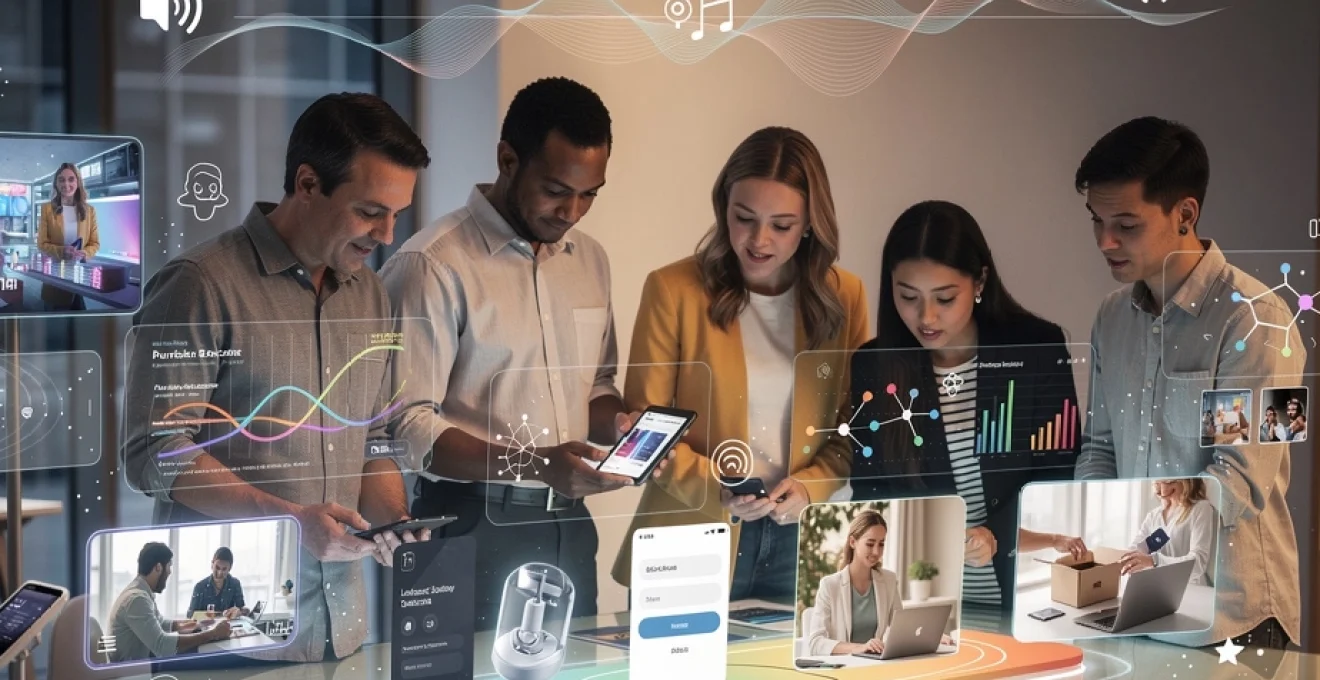
Modern consumers expect far more than functional products—they demand experiences that resonate emotionally and create lasting connections. In an increasingly competitive marketplace where product differentiation becomes more challenging, the experience surrounding your offering often becomes the primary differentiator. Brands that master the art of memorable product experiences don’t just sell items; they cultivate relationships, foster loyalty, and generate advocacy that extends far beyond the initial purchase moment.
The most successful companies today understand that every interaction, from the first moment of brand awareness through post-purchase support, contributes to an overarching narrative that shapes customer perceptions. This comprehensive approach to experience design requires strategic thinking, technological sophistication, and deep understanding of human psychology. When executed effectively, memorable product experiences transform casual browsers into passionate brand advocates who actively promote your offerings within their networks.
Understanding customer journey mapping and touchpoint optimisation
Customer journey mapping serves as the foundation for creating memorable experiences by providing a comprehensive view of every interaction point between your brand and potential customers. This systematic approach reveals opportunities for enhancement and identifies friction points that could derail the experience. Effective journey mapping goes beyond simple transaction flows to encompass emotional states, expectations, and motivational drivers at each stage of the customer lifecycle.
Successful brands recognise that touchpoint optimisation requires both quantitative analysis and qualitative insights. Data analytics reveal behavioral patterns and conversion bottlenecks, while qualitative research uncovers the emotional context behind customer actions. This dual approach enables brands to create experiences that feel both efficient and emotionally satisfying, addressing practical needs whilst building deeper connections.
Pre-purchase awareness stage experience design
The awareness stage represents your first opportunity to create a positive impression and set expectations for the overall brand experience. During this critical phase, potential customers form initial opinions based on limited information, making it essential to craft touchpoints that immediately communicate value and differentiate your offering from competitors. First impressions established during awareness activities significantly influence subsequent decision-making processes.
Effective awareness stage design focuses on creating discoverable, shareable content that addresses genuine customer needs rather than promotional messaging. Educational resources, thought leadership content, and valuable tools position your brand as a trusted advisor before customers even consider making a purchase. This approach builds credibility and establishes emotional connections that influence later purchase decisions.
Product discovery and research phase touchpoints
The discovery phase requires sophisticated information architecture that enables customers to explore your offerings intuitively while gathering the specific details they need for informed decision-making. During this stage, customers actively evaluate options and compare alternatives, making it crucial to provide comprehensive yet accessible information that highlights your unique value proposition.
Research-phase touchpoints should anticipate common questions and concerns while providing multiple pathways for customers to engage with your content. Interactive product demonstrations, detailed specification sheets, customer testimonials, and comparison tools help customers understand how your offering addresses their specific requirements. The key lies in presenting information progressively, allowing customers to dive deeper based on their individual interests and needs.
Purchase decision moment friction reduction
The purchase decision represents the culmination of all previous touchpoint interactions, making it essential to eliminate any barriers that might prevent conversion. Friction at this critical moment can undo weeks or months of positive experience building, highlighting the importance of streamlined, confidence-inspiring purchase processes. Decision-making friction often stems from unclear pricing, complicated checkout procedures, or insufficient purchase protection guarantees.
Optimised purchase experiences provide clear next steps, transparent pricing, and multiple payment options to accommodate different customer preferences. Security indicators, return policies, and customer support availability during the purchase process help reduce anxiety and build confidence. Smart brands also implement abandoned cart recovery strategies and personalised incentives to re-engage customers who hesitate during the decision-making process.
Post-purchase onboarding and activation strategies
Post-purchase onboarding transforms new customers into successful users who derive maximum value from their purchase. This critical phase determines whether customers become satisfied repeat purchasers or disappointed one-time buyers. Effective onboarding strategies acknowledge that the purchase represents the beginning, not the end, of the customer relationship.
Successful activation programmes combine practical guidance with emotional reinforcement, helping customers achieve quick wins while reinforcing their purchase decision. Progressive disclosure techniques introduce features and capabilities gradually, preventing overwhelming
new users while encouraging deeper exploration over time. Welcome emails, in-app walkthroughs, interactive tutorials, and proactive support touchpoints ensure customers feel guided rather than left to figure things out alone. When brands celebrate key milestones—such as first successful use, feature adoption, or renewal—they reinforce positive emotions and strengthen long-term engagement.
To optimise the post-purchase experience, brands should implement feedback loops that capture sentiment and usage data early. Short surveys, NPS prompts, or contextual feedback widgets reveal where customers struggle and where they experience delight. These insights allow teams to refine onboarding flows, improve self-service resources, and prioritise product enhancements that directly impact satisfaction. Over time, a well-orchestrated onboarding and activation strategy becomes a powerful driver of loyalty, referrals, and product-led growth.
Multi-sensory product experience design methodologies
While digital-first journeys often focus on screens and interfaces, truly memorable product experiences engage multiple senses. Multi-sensory design recognises that sight, touch, sound, and even scent contribute to how customers perceive and remember a brand. Research in cognitive psychology consistently shows that the more senses involved in an experience, the stronger and more enduring the memory becomes.
Designing a multi-sensory product experience does not mean adding gimmicks; it means aligning sensory cues with your brand promise and customer expectations. A premium brand might emphasise tactile materials and refined soundscapes, whereas a playful brand might prioritise bold visuals and dynamic audio cues. By approaching sensory design systematically, brands can create product experiences that feel cohesive, intentional, and emotionally resonant at every touchpoint.
Visual identity systems and aesthetic consistency frameworks
Visual design often represents the first and most persistent layer of a product experience. A strong visual identity system ensures that colours, typography, iconography, and layout patterns work together to communicate brand attributes consistently across channels. When executed well, visual identity becomes a shorthand for trust—customers recognise your interfaces, packaging, and content instantly, even in crowded environments.
To build this level of consistency, brands should develop clear design systems and component libraries that govern how visual elements are applied in different contexts. These frameworks go beyond style guides to include rules for motion design, micro-animations, and responsive layouts. Think of them as the grammar of your visual language: they ensure that every new screen, ad, or label “sounds” like your brand, even when created by different teams or partners. Over time, a cohesive aesthetic reduces cognitive load, improves usability, and reinforces brand recall.
Haptic feedback integration in physical product interactions
Touch is often the forgotten sense in digital strategy, yet it plays a crucial role in how we judge quality and usability. In physical products and hardware interfaces, the weight of a device, the click of a button, or the smoothness of a surface all shape perceived value. In the digital realm, haptic feedback through smartphones, wearables, and controllers can simulate physical responses that make interactions feel more intuitive and satisfying.
Thoughtful haptic design uses vibration patterns, resistance, and tactile cues to reinforce important actions or states. For example, a subtle vibration confirming a completed payment or a distinct haptic pattern signalling an urgent notification can reduce uncertainty and improve confidence. Brands should treat haptic feedback as part of their product experience toolkit rather than an afterthought—testing different patterns with users to identify which sensations feel helpful, not intrusive. When aligned with visual and auditory cues, haptics create a richer, more embodied product experience.
Auditory branding through sonic identity development
Sound has a unique ability to evoke emotion and trigger memory, which is why sonic branding has become a strategic priority for many leading companies. A sonic identity comprises more than a jingle; it includes notification tones, UI sounds, voice prompts, and even the ambience in physical spaces. Together, these elements form an auditory signature that customers subconsciously associate with your brand.
Developing a sonic identity starts with defining the emotions and attributes you want to convey—calm and reassuring, energetic and bold, or innovative and futuristic. Sound designers can then create a palette of tones and motifs that reflect these qualities across different touchpoints. For instance, a financial app might favour warm, low-frequency sounds that signal stability and trust, while a gaming platform might lean into crisp, high-energy effects. By standardising these audio cues and testing them with users, brands ensure that every sound reinforces the overall experience rather than distracting from it.
Olfactory marketing applications in retail environments
Scent is one of the most powerful yet underused tools for creating memorable brand experiences. Studies have shown that pleasant, brand-aligned scents can increase dwell time, enhance mood, and improve purchase intent in retail environments. Unlike visual or auditory cues, scent operates largely at a subconscious level, shaping how customers feel about a space without requiring active attention.
Olfactory marketing involves developing signature scents that align with brand values and customer expectations, then diffusing them consistently across physical locations. For example, a wellness brand might use natural, calming aromas, while a tech retailer might prefer clean, subtle notes that suggest freshness and innovation. It is important to apply scent with restraint—overly strong fragrances can be off-putting or even exclusionary for sensitive visitors. When balanced correctly, however, scent becomes part of the immersive environment, reinforcing the overall product experience and making visits more memorable.
Personalisation engine implementation for product customisation
As customers become accustomed to streaming services and ecommerce platforms that “know” their preferences, personalised product experiences are no longer optional. Personalisation engines use data and algorithms to adapt content, interfaces, and offers to individual users in real time. When done well, this level of product customisation makes experiences feel more relevant, efficient, and human.
Implementing personalisation at scale requires more than adding a recommendation carousel. Brands must build robust data pipelines, choose suitable machine learning models, and define governance policies that protect privacy while enabling insight. The goal is to move from generic journeys to adaptive paths where each interaction informs the next. You can think of this as designing a product that learns from every click, purchase, or behaviour, continuously refining how it serves each person.
Machine learning algorithms for behavioural pattern recognition
At the heart of advanced personalisation lies the ability to recognise behavioural patterns. Machine learning models such as collaborative filtering, clustering algorithms, and sequence models analyse user actions—page views, clicks, dwell time, purchases—to identify meaningful segments and predict likely needs. Instead of relying solely on static demographics, these systems infer intent from real behaviour in context.
For product teams, this means shifting from manual rule-setting to outcome-driven learning. Rather than deciding in advance which content to show every user segment, you define objectives (engagement, conversion, retention) and let algorithms test and refine the best combinations of messages and features. Of course, human oversight remains essential: data scientists and marketers must regularly review outputs to ensure recommendations align with brand values and ethical guidelines. When calibrated carefully, behavioural pattern recognition becomes a powerful lever for delivering the right experience at the right moment.
Dynamic content delivery systems and real-time adaptation
Recognising patterns is only valuable if your product can respond quickly. Dynamic content delivery systems connect your personalisation models to the interfaces customers actually see—web pages, apps, emails, and in-product messages. These systems act like traffic controllers, deciding in real time which version of a page, message, or promotion each user should receive based on their current context and historical data.
For example, a returning customer might see content focused on advanced features or complementary products, while a first-time visitor encounters educational resources and social proof. Real-time adaptation can also consider device type, location, time of day, and previous engagement to fine-tune what appears on screen. When orchestrated effectively, these micro-adjustments create a sense that the product “understands” the user, reducing friction and increasing perceived value. The challenge is ensuring that the logic behind dynamic content remains transparent and testable, so optimisation efforts are grounded in measurable impact rather than guesswork.
Segmentation strategies using customer data platforms
Customer Data Platforms (CDPs) provide the unified foundation required for sophisticated segmentation and personalisation. By consolidating data from CRM systems, analytics tools, support platforms, and offline interactions, CDPs create a single view of each customer that can be activated across channels. This holistic perspective enables brands to move beyond basic segments like age or geography and define audiences based on lifecycle stage, engagement intensity, or product usage patterns.
Effective segmentation strategies start with clear business objectives: Are you trying to increase trial-to-paid conversion, re-engage dormant users, or upsell power users to a premium tier? Once goals are defined, you can build segments that reflect relevant behaviours and design tailored product experiences for each. For instance, new users who have not completed onboarding might receive in-app guidance and targeted emails, while loyal advocates might be invited to beta programmes or exclusive communities. CDPs make it easier to test and iterate on these strategies, ensuring that segments remain dynamic as customers evolve.
Predictive analytics for proactive experience optimisation
Predictive analytics extends personalisation from reactive adaptation to proactive experience design. By using historical data to forecast future behaviour—such as churn risk, likelihood to purchase, or propensity to upgrade—brands can intervene before problems arise or opportunities are missed. It is the difference between waiting for a customer to disengage and reaching out with support or incentives at the first sign of risk.
For example, if a model predicts that users who skip a key feature tutorial are more likely to abandon the product, you can trigger timely nudges or offer live assistance to those at-risk users. Similarly, predictive models can identify customers who are ready for advanced features or add-ons, enabling contextual cross-sell prompts that feel helpful rather than pushy. As with all data-driven methods, transparency and ethics matter: customers should feel that personalisation makes their journey smoother and more relevant, not intrusive or manipulative. When used responsibly, predictive analytics becomes a powerful tool for shaping experiences that anticipate needs rather than simply reacting to them.
Community-driven engagement through User-Generated content platforms
Even the most polished product experience can feel incomplete if it remains purely one-way. Community-driven engagement transforms customers from passive recipients into active participants who contribute content, feedback, and advocacy. User-generated content (UGC)—from reviews and testimonials to tutorials and creative remixes—adds authenticity and social proof that brand-produced materials often cannot match.
Building platforms that encourage UGC requires more than adding a comment box. You need clear incentives, simple creation tools, and visible recognition mechanisms that reward participation. For example, showcasing customer stories on your homepage, highlighting top contributors in-app, or offering early access to new features for community leaders can all strengthen engagement. Over time, these community spaces become extensions of the product experience itself, where customers learn from one another, share best practices, and co-create value with your brand.
UGC platforms also provide rich qualitative data that can inform product development and marketing. Patterns in questions, feature requests, or shared workflows reveal what customers truly care about. By closing the loop—acknowledging community input and showing how it shapes roadmap decisions—you reinforce a sense of partnership. This collaborative dynamic not only deepens loyalty but also reduces acquisition costs, as enthusiastic community members naturally become advocates and referrers.
Gamification mechanics and behavioural psychology triggers
Gamification applies game design principles to non-game contexts to make interactions more engaging and motivating. When incorporated thoughtfully into product experiences, mechanics such as points, levels, challenges, and rewards can encourage desired behaviours—onboarding completion, feature adoption, or repeat purchases—without feeling superficial. The key is to ground these mechanics in behavioural psychology rather than treating them as decorative add-ons.
For instance, progress indicators tap into our desire for completion, while streaks and daily goals leverage commitment and habit formation. Social leaderboards can harness friendly competition when used with care, though they may demotivate some users if poorly calibrated. To avoid these pitfalls, brands should design gamified experiences that respect intrinsic motivation: you want to amplify a user’s existing goals—learning a skill, achieving fitness, improving productivity—rather than distract from them. Asking yourself, “What meaningful progress do we want to help users see?” is often more effective than asking, “Where can we add badges?”
Behavioural triggers such as variable rewards, timely prompts, and positive reinforcement can further strengthen engagement when applied ethically. For example, celebrating key milestones with personalised messages or small rewards can create emotional peaks that customers remember. However, it is important to avoid manipulative patterns that prioritise short-term engagement over long-term wellbeing. The most sustainable gamification strategies align brand success with user success, ensuring that every nudge and reward contributes to genuine value in the customer’s life.
Performance measurement through experience analytics and attribution modelling
Designing a memorable product experience is only half the challenge; the other half lies in measuring its impact accurately. Experience analytics focuses on understanding how users interact with your product across touchpoints—where they engage, where they drop off, and which elements drive satisfaction or frustration. Tools such as funnel analysis, heatmaps, session recordings, and in-product surveys provide granular visibility into real behaviour, replacing assumptions with evidence.
However, experience analytics alone cannot answer a critical question: which touchpoints contribute most to outcomes like conversion, retention, or advocacy? This is where attribution modelling becomes essential. Attribution models attempt to assign value to different interactions along the customer journey, helping teams understand whether, for example, an interactive demo, a community review, or a personalised email had the greatest influence on a purchase decision. While no model is perfect, even simple multi-touch frameworks offer more nuance than last-click approaches, which tend to overvalue final interactions and undervalue earlier experience-building touchpoints.
To build a robust measurement strategy, brands should define clear KPIs for each stage of the journey—awareness, activation, engagement, and loyalty—and align analytics tools accordingly. Regularly reviewing dashboards is not enough; teams must also run experiments, compare cohorts, and correlate qualitative feedback with quantitative trends. Over time, this disciplined approach turns experience design into a continuous optimisation loop: you test ideas, measure their effect, learn from the data, and iterate. In this sense, creating a memorable product experience that drives engagement is less a one-time project and more an ongoing practice of listening, adapting, and improving.